


Sometimes the piece of evidence that changes the game for your client is something that should be there, but isn’t.
The phone call came from defense counsel.
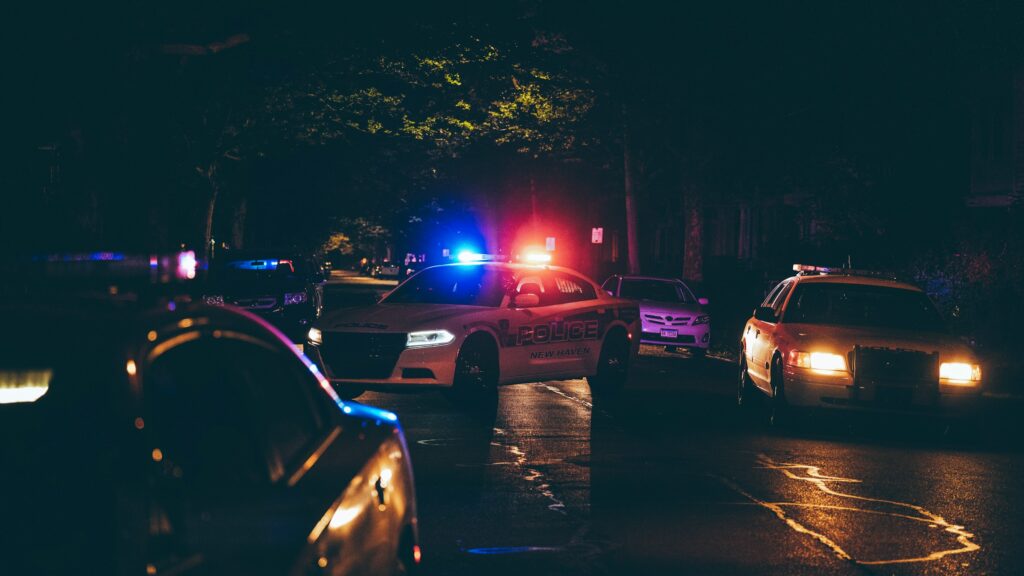
A man named Ethan Cole had been arrested, following a police stop that escalated into a physical struggle with officers in the city of Riverton. Mr. Cole’s version of the events was that he was a passenger in a vehicle that was pulled over, and the police immediately focused their attention on him. He told the officers that he hadn’t done anything wrong and didn’t know why they were talking to him when he wasn’t driving the vehicle.
Mr. Cole said officers pulled him out of the vehicle and proceeded to kick him and punch him while he was on the ground. Mr. Cole reacted with what he says was defensive movements only. He was charged with several things, the most serious being felony battery of an officer.
As with many criminal defense investigations, questions remained about exactly what had occurred during the incident and whether all available evidence had been identified and reviewed. I was retained to conduct an independent investigation.
The assignment was straightforward:
- Review the circumstances surrounding the arrest.
- Examine the scene.
- Locate and interview witnesses.
- Determine whether additional information existed that could assist defense counsel in understanding what happened.
At first glance, the case appeared relatively simple. Police officers had conducted a traffic stop that resulted in a confrontation between law enforcement and a vehicle passenger. Witnesses had observed portions of the incident, and reports had already been generated.
But experience has taught me that even the simplest cases deserve a closer look.
Sometimes the smallest detail can become the most important.
The Scene
I began the investigation by examining the scene.
In January of 2014, I traveled to the location where the arrest occurred. It was near the intersection of Jefferson Avenue and Maple Street in Riverton, a mixed industrial and residential neighborhood. During the examination, I observed that the area was active with both vehicle and pedestrian traffic during daylight hours.
Vehicles parked along both sides of the road created visual obstructions in several locations. Depending on where a witness was standing, portions of the incident could have been difficult to observe. Understanding those sight lines would later prove important when evaluating witness statements.
After completing the scene examination, I turned my attention to locating witnesses.
The Witnesses
The first witness I spoke with was Michael Bennett, a local business owner whose auto body shop was located near where the incident occurred.
Mr. Bennett recalled seeing a large police presence on the day in question. He remembered observing quick movements and activity across the street. Concerned for the safety of his employees, he moved inside his business and did not continue watching what was happening outside.
Later, he heard that the police activity involved a suspect resisting arrest, although he could not recall exactly who had told him that, just neighborhood gossip. While Mr. Bennett’s observations were limited, they helped establish the level of police presence at the scene.
The next witness was Daniel Rivera, a teenager who lived at the house right by where the arrest took place.
Mr. Rivera recalled hearing a lot of noise outside his home and briefly stepped outside to see what was happening. He observed a large police presence before returning inside. He did not witness the physical encounter and could provide little additional information. Although I was hoping for more detail from him, I appreciated the fact that he’d spoken to me at all. In my experience, teenagers sometimes can be a little guarded and unwilling to speak with adults.
The third witness interview proved more informative.
Thomas Reed had been walking with his daughter in the area when police activity prevented them from continuing down their intended route. According to Mr. Reed, officers had blocked access to the street and redirected pedestrian traffic around the scene.
After returning to the neighborhood, Mr. Reed saw an SUV stopped on the roadway. He recalled seeing multiple police units and many officers present.
From his position, he could see officers attempting to convince a passenger to exit the vehicle. He described hearing verbal commands and discussions between officers and the occupant. At the time, he did not see any physical altercation between the passenger and the officers. He did, however, recall one interesting thing: An officer apart from the group appeared to be recording the incident with a camcorder.
At the time, it seemed like a small detail. It would eventually become the most significant finding of the investigation.
At the time, it seemed like a small detail. It would eventually become the most significant finding of the investigation.
The final witness interview was with Robert Harper, who provided the most detailed account of the incident.
Mr. Harper observed officers conducting a traffic stop involving a vehicle occupied by a male passenger and a female driver. He recalled hearing officers repeatedly instruct the passenger to exit the vehicle.
The passenger refused. He appeared to be having some sort of mental episode and could be heard yelling for help and saying he had not done anything wrong. Mr. Harper recalled hearing the driver pleading with the passenger and officers to calm down; according to him, she told the officers that the passenger was special needs.
Mr. Harper stated that additional officers arrived as the situation developed. Eventually, officers physically removed the passenger through the passenger-side window. A struggle ensued: Mr. Harper described the passenger resisting officers’ efforts to restrain him. He observed the suspect pushing officers away and using his legs to prevent officers from gaining control. Additional officers arrived to assist with the arrest.
Mr. Harper said that he did not see officers deploying a taser or any less-lethal projectiles. He did not feel, based on what he observed, that officers used excessive force. He further recalled hearing the female driver yell repeatedly at officers, asking why they were treating the passenger in that manner.
Like the previous witness, Mr. Harper made one statement that immediately stood out: He recalled seeing an officer recording the incident with a camcorder. Unlike casual observations that may be forgotten over time, this detail appeared clear in his memory.
The significance of that observation became apparent as the investigation continued.
Independent video evidence often provides an objective perspective that witness recollections cannot.
Witnesses may forget details.
Video recordings don’t forget.
As we continued our witness interviews and compiled our investigative findings, a pattern emerged: Two witnesses independently reported the existence of a camcorder. The witnesses did not appear connected to one another, but both described an officer recording the incident.
That consistency raised an obvious question: Was there a video recording?
If so, where was it?
My Recommendations
I ultimately made several recommendations to defense counsel: Interview anyone who may have known anything about the suspect’s mental condition at the time of the arrest, obtain all video evidence associated with the incident, and try to verify the existence of the camcorder video that multiple witnesses recalled seeing an officer recording.
Meanwhile, I continued canvassing the neighborhood, contacting nearby businesses, workers, and residents in an effort to identify more witnesses or potential surveillance footage. Those efforts yielded little additional information. Cameras at nearby businesses focused on private property and not the surrounding streets where the incident occurred.
Months later, defense counsel subpoenaed records and recordings from the police department. Among the materials produced was dash-camera footage from one of the responding patrol vehicles.
The recording revealed an interesting detail: It showed another patrol unit arriving after the initial responding officers were already on scene. As the recording continued, a uniformed officer exited his cruiser and walked to the back of the car.
The officer opened the trunk and removed what appeared to be a handheld camcorder.
Although portions of the dash-camera view were obstructed by the patrol vehicle itself, the footage appeared to show the officer walking away from the cruiser carrying the camcorder toward the ongoing incident. From the available footage, it appeared that the officer was preparing to record — or was actively recording — the encounter.
This was significant. Until that dashcam video emerged, the existence of a camcorder had been supported only by witness statements. Now there was independent, police-produced video showing an officer retrieving what appeared to be a camcorder and carrying it toward the scene.
The question became more important than ever: If police had used a camcorder to record the incident, where was the recording?
My Report
My investigation could not determine what the camera may have captured or what became of any resulting recording. The only certainty was that multiple independent witnesses described seeing an officer with a camcorder, and dashcam footage appeared to show an officer retrieving one and then heading toward the scene of the arrest.
Still, the investigation had accomplished its objective: I’d identified witnesses, documented statements, examined the scene, and identified potential new evidence.
I submitted my report to defense counsel along with witness recordings, scene documentation, and investigative findings. I did not claim that the investigation proved anything conclusive about what happened during the arrest.
But I’d asked a question that proved to be crucial — involving a camcorder and a missing recording that I had good reason to believe existed. But police never produced any camcorder video, and no explanation accompanied its absence.
I found the absence of that recording extremely interesting.
Defense counsel agreed. The attorney presented these investigative findings to the prosecution and raised a straightforward question:
Where was the camcorder video?
According to information the defense learned later, law enforcement claimed they had made efforts to find the recording, but they never did produce it.
Epilogue
We’ll never know whether the video would have helped the prosecution or the defense. For investigators, that doesn’t actually matter: Evidence has value regardless of who it helps. We’re not trying to find evidence to prove the defense’s theory. Our objective is to uncover the “good” facts and the “bad” facts and share them with the defense team.
In this case, I’d uncovered an important fact that wasn’t necessarily “good” or “bad”: the fact that this recording existed and that police had never made it available.
In the end, law enforcement’s failure to account for the recording became a significant issue raised by the defense. After the matter was reviewed (and the questions surrounding the missing recording remained unresolved), the prosecution dismissed the case.
Investigations are rarely solved by dramatic revelations. More often, they are solved through careful observation, persistence, and the willingness to ask questions others overlook.
Sometimes the most telling evidence is an absence of evidence that should exist. And sometimes, the question that changes the outcome of a case is very simple:
What happened to the tape?
About the author:
Steve Morrow is a legal investigator and founder of Morrow Detective Agency in Simi Valley, California. He began his investigative career in 2003 and has conducted more than 1,000 investigations involving criminal defense, civil litigation, family law, witness development, background investigations, difficult locates, surveillance, and service of process.
A graduate of the Nick Harris Detective Academy, Morrow founded his firm in 2011 and has built his practice around identifying facts, locating and interviewing witnesses, developing investigative leads, documenting findings, and providing attorneys with clear, organized, court-ready investigative reports. His clients include attorneys, law firms, and private clients throughout Southern California. His approach emphasizes thorough fieldwork, objective fact-finding, strategic problem solving, and investigative support designed to help counsel better evaluate and develop their cases.