


News flash: Reading is apparently dead. At PursuitMag headquarters, we didn’t get the memo.
This spring and summer, we’ve been doubling down on book coverage — at least, to the extent we can, whilst operating with no actual staff devoted full-time to magazine things.
To help out with our relative poverty of resources, we’re lucky to have struck an agreement some years ago with Chapter 16, a regional online literary magazine that publishes book reviews, author interviews, and occasional essays: They are fabulous, and they let us republish reviews of crime novels, true crime NF, and other spy- and PI-adjacent literature, as long as we credit them and link back. It’s win-win for us, and authors get their books in front of a new set of eyes.
In an era when magazines and newspapers are shrinking book coverage or even eliminating their book sections altogether, sites like Chapter 16 are miracles of defiance, and bright spots in a firmament of dark news for authors and book lovers. Sure, we get it: BookTok is a thing, and it works great for certain kinds of authors. But for some of us paper-loving book dorks, there’s nothing like an old-school newsprint book review section in the Sunday NYTimes to page through by the fireside on a chilly morning. And if you’re an author, there’s nothing like seeing your book featured there … even though, it is now claimed, Book Reviews Don’t Drive Sales.
Well, sh*t. What does drive sales, then? Nobody seems to know.
Ask any author (or literary agent): It’s tougher than ever for a book to break out, and nigh impossible for aspiring authors to land their first book deal. Writing something excellent helps, for sure, but it’s no guarantee. According to multiple author friends (and their agents), now is an insanely hard time to find a publisher for a nonfiction proposal. Memoirs are notoriously hard to sell if the author’s not a celebrity already. Novelists may have it slightly easier, but it’s still a tough world out there, even for established authors. Meanwhile, big legacy media keeps declaring menacingly that The End of Reading Is Here, students can’t finish entire books anymore, and The Literary Ecosystem Is Dying.
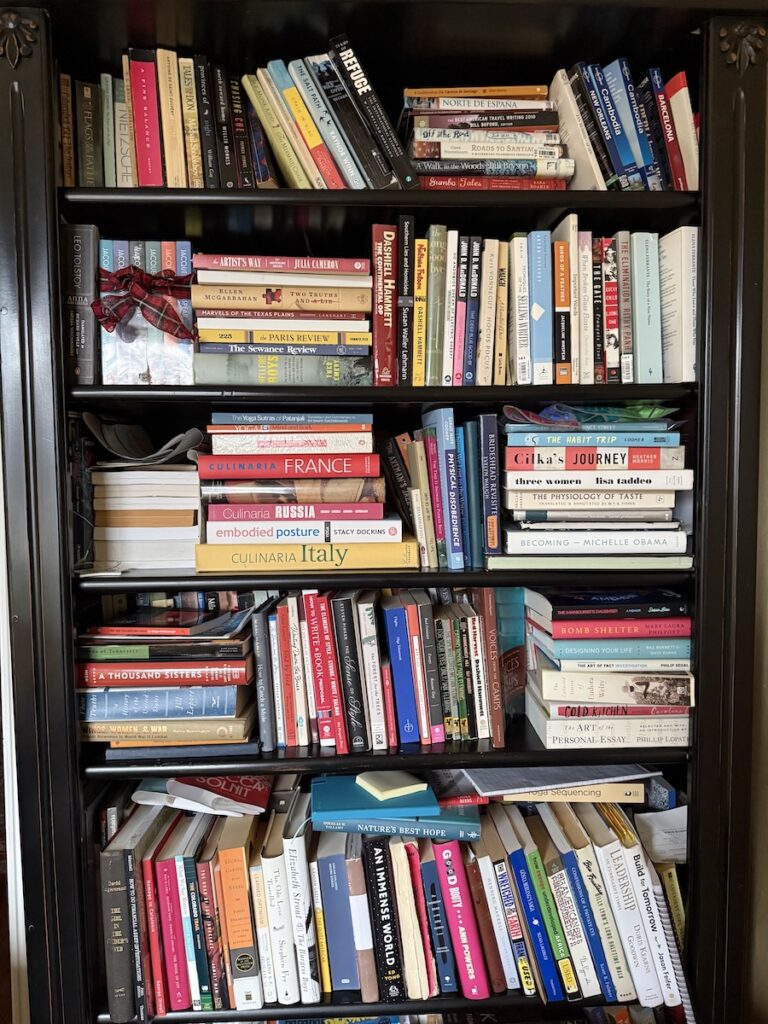
All that is mighty sad indeed, but I’m not sad for myself. I’m sad for all those folks out there who are missing out on what has been one of the great loves of my life: Reading is the one good habit I don’t have to force myself to keep doing. Our house is utter bookish chaos. Every bookshelf is stacked two layers deep. More stacks rise from counters, end tables, bedside tables. I kind of know where things are, but mostly there is no real order to it. This is not an ego library or a decor strategy. I do not have the books organized by color. I do not have the books organized at all, if I’m honest.
I’ll get to that eventually.
So, back to this big, lofty idea of expanding our book coverage. This is absolutely something I want to do, if only out of sheer insubordination and a refusal to bow before the forces at play insisting that reading is dead. Because I’m here to tell you: In my little, possibly irrelevant world, reading is very much not dead. I have very little power to fix its alleged demise in the rest of the world, but what I can do is celebrate the written word in this feisty little magazine for PIs, spies, and the curious among us.
How will I do this? I don’t know. But in the meantime, let me tell you about some great things Hal and I have read lately:
Nonfiction
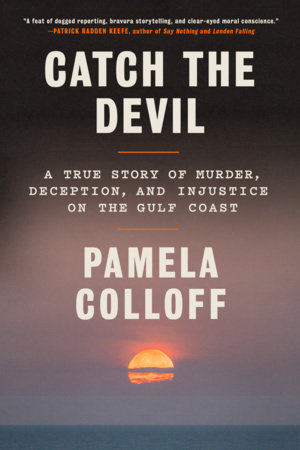
Our friend Pamela Colloff‘s debut book, Catch the Devil, comes out next week (July 14), and I am so mad I can’t be there for the launch party. But I’ll be celebrating her from afar.
In Catch the Devil, Pam expands on her 2019 NYT/ProPublica piece on Paul Skalnik, a notorious liar, sexual abuser, and conman who set up a neat little scam for himself as a jailhouse snitch and put people away for life (and onto death row) with his lies. As with all of Colloff’s reporting, she spins a brilliant and infuriating yarn that shines a solar flare on how and why our criminal justice system sometimes gets it outrageously wrong. You’ll scream and shake your fists, and you will not be able to put this book down and go to sleep.
Catch the Devil is going to be a huge book this year, so go ahead and join the club now — get it when it drops next week. While you wait, read our review.
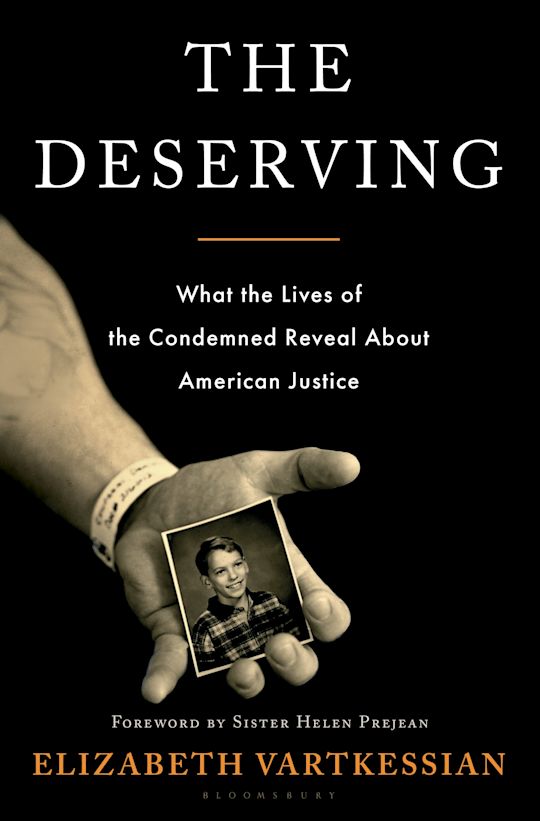
Elizabeth Vartkessian’s The Deserving is another tough, revealing read about the darker side of the criminal justice system. Vartkessian is a mitigation specialist; for those who don’t know, it’s her job to spend hundreds of hours visiting with defendants in capital cases and getting to know their families, teachers, neighbors, and friends — to get a fuller picture of the person’s life, including past abuse, trauma, and mental illness. The stories she collects might save her clients’ lives during the penalty phase of a capital trial, when the jury hears arguments about aggravating or mitigating factors and decides on a sentence.
This book is about Vartkessian’s life’s work. What comes shining through is her immense compassion — for clients and victims alike — and the moral urgency that drives her to represent people accused or convicted of horrific crimes. The Deserving came out in January, and I recommend it to anyone interested in mitigation investigations or criminal justice in general. (We interviewed Liz for the “Sound of Pursuit” podcast, and that episode will come out later this summer.)
Fiction
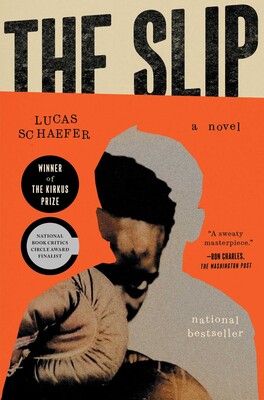
I’m not sure whether The Slip flew under the radar or not, but for some reason, I didn’t hear about it when it came out late last year — even though it got tremendous reviews in the NYTimes and WashPost. I’m late to the game, but I am definitely here for it now, cheering like crazy and holding up one of those foam #1 fingers.
This is somehow, shockingly, Lucas Schaefer‘s debut novel. I say “shockingly,” because how on earth did he just DO that, first time out of the gate? This is the kind of novel that tempts reviewers to deploy language like “rollicking” and to use a lot of fun boxing metaphors, because The Slip‘s setting is 1998 Austin, just minutes before full-on gentrification sets in, and a lot of the action centers on a grimy, fabulous old boxing gym and a “Keep Austin Weird” cast of up-and-coming fighters, over-the-hill trainers with rap sheets, a literal clown, a schizophrenic guy, and a coyote only he can see (even though it actually exists).
Schaefer weaves together so many outrageous characters, so many wild tangents, and so many Chekhov’s gun moments, that you wonder, Can he pull this off? Will all the threads weave together in the end? Will the coyote be the key to it all? I did wonder, for nearly 500 pages. But ultimately, I loved the wondering and plowing through the pages so much, I forgave Schaefer the very occasional frayed thread or shaggy dog tale. And the ending made me laugh out loud, clap my hands, and yell, “No f***ing WAY!” Was it plausible? Who cares? It totally made my day.
Note: If you do NOT enjoy extremely creative ribald language or devastatingly awkward sex scenes, portrayed unflinchingly, skip this one. But if you love a rollicking mystery (Oh yeah, did I mention that there’s a missing teenager at the heart of the story?) that comes out punching well above its weight class as a debut, get your copy now. The paperback edition came out in June.
Does that roundup count as book coverage? Will I be able to do more like this, with a staff of zero? Stay tuned. And if you’d like to try your hand at writing a book review, a “Best of” book roundup, an author interview, or anything else crime-lit or true-crime related, hit me up. (But don’t be like this guy.)
About the author:
Kim Green is a writer, public radio producer, and occasional flight instructor. She’s produced stories for NPR and Marketplace and was the co-translator of Red Sky, Black Death and co-writer of Slow Noodles: A Cambodian Memoir of Love, Loss, and Family Recipes. She’s the managing editor or Pursuit Magazine and produces the “Sound of Pursuit” podcast.