



A storied criminal justice reporter’s first book tracks how a serial liar conned the courts — and sent dozens of people to prison — by telling prosecutors exactly what they wanted to hear.
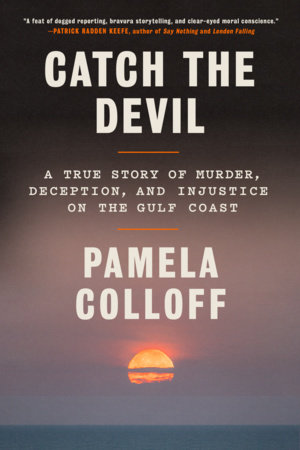
Catch the Devil: A True Story of Murder, Deception, and Injustice on the Gulf Coast
By Pamela Colloff. Knopf. 320 pages. $32.
How did Paul Skalnik, a conman with a long history of fraud, grand theft, and sexual abuse of women and minors, become a trusted, go-to jailhouse informant for prosecutors in Pinellas County, Florida?
That’s the question Pam Colloff sought to answer as she reported the 2019 ProPublica & New York Times feature that she’s now expanded into this masterful and profoundly humane debut (out in July, 2026).
“You’ve got to make a deal with a sinner to catch the devil,” said former prosecutor Robert Heyman in an interview, explaining why he and others relied on Skalnik’s testimony to secure dozens of convictions and send four people to death row.
If you’re sitting the fence on whether it’s a necessary evil to permit criminal cases to hinge on the word of liars and grifters, let this extraordinary book disabuse you.
Colloff paints a vivid picture of Skalnik and the destroyed lives he left in his wake: bilked exes, bankrupted “friends,” abused girls and women, and the dozens of accused men he claimed had confessed their crimes to him. Colloff introduces several victims in each category, then zooms in on James Dailey, a Vietnam veteran with PTSD and a broken life, convicted of murder and sent to death row almost entirely on the strength of Skalnik’s sworn testimony.
Sometimes, the whole truth can never be known. Real-life investigations and trials are rarely like the ones on television. But Colloff builds a powerful case for Dailey’s innocence and Skalnik’s deceit, unspooling the facts in her signature way, honed over decades of top-tier criminal justice reporting: She doesn’t tell you how to feel. She just lays out mountains of evidence, exhaustively and dispassionately, painting a clear, infuriating picture of the perverse political incentives that reward prosecutors for securing convictions at almost any cost — and not necessarily for getting justice.

A page-turner fueled by years of intensive reporting and buoyed by moral urgency.
In Skalnik, prosecutors had found a useful tool. And he had learned to tell them what they wanted to hear — in return, it seems, for a tacit promise of leniency. (Prosecutors deny that any such promises were made.) “What made [Skalnik] so dangerous was not his intelligence or cunning,” writes Colloff, “but rather how readily the institutions that were supposed to uphold the law and protect the most vulnerable had amplified his lies.”
Does karma (or the law) finally catch up with Skalnik? Does the truth come to light for James Dailey? Do prosecutors learn any lessons about using shady jailhouse snitches to bolster paper-thin criminal cases? Read and find out.
Then seek out Colloff’s incredible archive of magazine stories. I’ve loved her work since I discovered “The Innocent Man,” her groundbreaking 2012 series in Texas Monthly about the 1986 wrongful conviction of Michael Morton for his wife’s murder. Her work shines a Klieg light on the many ways our criminal justice system falls short, including debunked forensic science and prosecutorial misconduct. If you’ve never read her writing before, this book is a powerful entry point — a page-turner fueled by years of intensive reporting and buoyed by moral urgency.
About the author:
Kim Green is a writer, public radio producer, and occasional flight instructor. She’s produced stories for NPR and Marketplace and was the co-translator of Red Sky, Black Death and co-writer of Slow Noodles: A Cambodian Memoir of Love, Loss, and Family Recipes.