



The Inquisitor
Tips for Interviewing One of the World’s Most Accomplished Liars

Five years ago this month, Bernie Madoff was arrested at his Manhattan penthouse, thus ending the biggest Ponzi scheme the world has ever known.
Award-winning financial writer Diana Henriques was the first journalist to interview Madoff after his incarceration. She chronicled the unfolding scandal for the NYTimes and has written a masterful account of Madoff’s fraud and its global repercussions.
In the prologue of The Wizard of Lies: Bernie Madoff and the Death of Trust, the author describes her experience of interviewing the man who fooled friends, family, and most of Wall Street for decades, to the tune of $65 billion:
“He is soft-spoken and intense, with occasional flashes of wit…Throughout, he seems unfailingly candid, earnest, and trustworthy.
“But then, he always does, even when he is lying. That is his talent and his curse.”
In her decades covering the financial sector, Henriques has seen her share of scammers and spinners. But Madoff’s crime shocked even the most skeptical old hands of high finance. Henriques describes Madoff as a “Wall Street statesman” — a well-respected investment manager who pioneered electronic trading and once chaired the NASDAQ. The real Madoff — a hapless fraud, running an unsustainable skyscraper built of cards and deluding himself that he would succeed — lay just beneath the surface, invisible to all but a few, whose warnings went unheeded.
His “fatal gift,” the author says, was a “magical ability to win people, to always claim the benefit of the doubt, to explain away the uncomfortable reality.”
In part one of our Q&A, Henriques describes her strategies for interviewing a singularly accomplished liar like Madoff — how to talk a gifted manipulator into agreeing to a face-to-face, how to separate truth from fiction, and how to steel yourself against a conman’s constant spin:
1. Appeal to his ego.
I started requesting an interview with Madoff the minute he was arrested. I got absolutely nowhere for more than a year. In the fall of 2009, this first wave of quickie books started to hit the marketplace. As you might predict, Madoff is a cartoon’s figure, almost, in those books. None of the authors knew him from his years on the street, as I had.
I used that, frankly. I went back to him and said, “If you don’t cooperate with what we hope will be the definitive account of your story, this is all history is going to have, this two-dimensional cartoon figure, a total caricature of who you really are. Don’t you want to leave for your family, your grandchildren, their children, a more human portrait of who you are and how this happened?”
That got an answer, finally. He wrote me back that fall and said, “Well, I can’t really give an interview yet, but if I do give an interview, you will be at the top of my list.” It was the classic Madoff charm. He flattered me about my career and said he respected me all these years, so I would certainly be at the top of his list.
I kept writing him every month or so, “I’m still hoping, still waiting.”
2. Do your homework.
Meanwhile, I had a book to write. I assumed I was not going to get Madoff for this book, and that meant I had to talk to every other single human being on the planet that I could reach about Madoff.
Do not encounter a liar unprepared.
By the time he finally agreed in the summer of 2010 to talk to me, and we went through the prison bureaucracy of arranging an in-prison visit, I had already written a draft of the book without it. I had done an immense amount of research beforehand. I think the takeaway lesson from that is do not encounter a liar unprepared.
You absolutely must have done more homework that you ever imagined possible. That allowed me to go to that interview with a very clear idea of what the document record was, what other witnesses had said, what had emerged in the various lawsuits, and so forth, to confront him.
3. Meet face-to-face.
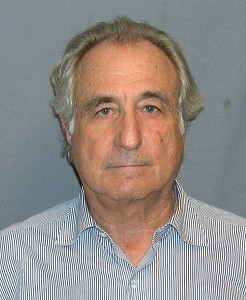
More important than anything that he could tell me, either factually or in terms of emotions and attitude, was a chance for me to see how he worked, how he presented himself and explained himself to people. It was that experience that allowed me to appreciate the seeds of his success, like what had made him so incredibly believable and trusted over the years, the way he deftly drew people in with praise, with flattery, with every appearance of personal interest and fascination.
They don’t call them ‘con artists’ for no reason. It is an artistry. There’s no way anyone could tell you about it. I know even my attempts at describing it fall short because Madoff, in person, is very different from anything you had ever seen or read about schemes. He broke all the rules of Ponzi schemer. I would never have fully appreciated that if I hadn’t been able to meet him in person.
4. Start small, with simple fact questions…and be skeptical about the answers.
I opened the interview with a handful of very unthreatening questions, things about which he could lie to me, but factual questions that we have not been able to find in the public record. None of them were make-or-break things, but they were kind of a test to let him how well-prepared I was. It was little things like, “What exactly did your father die of? What exactly was the story about Gibraltar Securities, this little securities firm that showed up in your family’s record with NCC troubles?”
The goal of the interview was less factual than it was psychological. I’m not seeking factual information from him. He’s pleaded guilty. He has claimed that “no one else knew,” and by the time I’m interviewing him in prison, at least two other people have pleaded guilty. So that’s already been shown to be a lie.
5. Pay careful attention to the spin.
The goal of the interview was not so much to gather information (about which he might lie). It was to see him in action, to test his capacity, to test his willingness to provide me a few details that could be verified and to understand how he saw the world. To get a window into his perception of what was happening, of what he did, of what was to come.
If you’re confronted with needing to find things out from the liar, you need to go back to work, because a con artist is always spinning you, always.
It was not a traditional investigative interview in terms of needing to find things out. If you’re confronted with needing to find things out from the liar, you need to go back to work, because a con artist is always spinning you, always. The reason to interview them is to study how they spin you, to understand their sales pitch, to understand what their perception of the world was, because you can learn so much from them.
6. Let your observations simmer.
The blessings of that first interview with him was that it was embargoed for use in the book, so I didn’t have to race out and immediately file a story (as I did with the second interview). The first interview, I had time to digest.
As any investigator knows, step one is get it all down and consolidate your notes of the experience. I was restricted to only a pad of paper and a pen. I couldn’t use a tape recorder or any other devices. I had to do old-fashioned pen-and-notebook reporting.
After an experience like that, you immediately rush to a quiet place, review all your notes to learn anything you can, and then take notes about everything you observed besides what was said — what he wore, what the room looked like, what time you started, what time it ended, all of those details.
7. Armor yourself against the spinner’s magic.
Step two is take a step back and see how you feel. That was the most useful activity for me. I was sure I had nailed this experience in black and white on my pad and could drop my shoulders. But I realized that Bernie had made me feel very special.
He had flattered me in a way that exactly touched my gut. He knew exactly what would make me feel great, what kind of praise would touch a journalist versus a lawyer, etc.
It was a blinding revelation — that even when you know someone’s a liar, when they are flattering you, they are drawing you in.
I realized that even though I knew that he was a fraud and a liar, his flattery of me felt good. It was a blinding revelation — that even when you know someone’s a liar, when they are flattering you, they are drawing you in. On reflection, in the aftermath of the interview, I could begin to say, “Oh, that’s what he was doing. Oh, wasn’t that a clever trick? God, I even felt good when he said that.” That allowed me to sort of do a more detached assessment of what the experience had been like.
Fortunately, I had done that, so when I did my second interview with him, which for various reasons did require me to immediately go out and write a story for the Times about it, I had already gone through that exercise. I was, sort of, not quite immune, but well-armored against the Madoff magic and was able to just rationally look at it.
8. Channel your inner shrink.
I would say, at least half of the interview dealt with his psychology, his expectations. I remember asking him, “Bernie, for heaven’s sake, it was a Ponzi scheme. How did you think it was going to end?”
There are only three exits from a Ponzi scheme: a one-way ticket to the Seychelles, a leap off a building, or a prison term. That’s what he should have known would happen.
The first big lie a Ponzi schemer has to tell is to himself.
But that (question) produced, perhaps, one of the most remarkable answers, where he is free associating and rambling about some ill-formed hope that somehow New York would blow up, he and everyone else would be dead, and he wouldn’t have to deal with the unraveling.
It was an interesting look into how Ponzi schemers delude themselves about what they’re doing. The first big lie a Ponzi schemer has to tell is to himself — that he will get away with it somehow; he will be the one Ponzi schemer of modern history who will not wind up on one of those three paths to destruction.
It was fascinating to me to see how he had deceived himself about that. That ability to simply shut the door on inconvenient and uncomfortable truth is an essential part of being a con artist.
Diana B. Henriques is a senior NYTimes financial writer and author of several books on the financial sector. She’s currently working on a book about Black Monday, 1987.
Coming soon: Part 2 of our Q&A with Diana Henriques, in which she describes the psychology and techniques of a Ponzi schemer.
Further reading:
NYTimes Madoff coverage (Includes a timeline and archive of Henriques’ articles)
How Bernie Madoff Did It (NYTimes review of Wizard of Lies)
Examining Bernie Madoff, ‘The Wizard of Lies’ (Henriques’s interview on NPR’s Fresh Air)