


All opinions are mine, fervently held, vigorously defended, and backed up by supremely frustrating experiences.
In response to something I recently posted on LinkedIn, fellow OSINT maven Brian Willingham noted that Florida is an all you can eat buffet when it comes to public records. Damn, as a person known for his eating prowess and love for buffets, I kicked myself for not using that line first. Instead, I took several words to explain why we researchers love Florida.
OK, if Florida is the best state, someone asked, which one is the worst?
Delaware!
I quickly wrote “Delaware.” Delaware is bad. As Tolstoy might say, each of the bad states is bad in its own way, but Delaware is not just bad. It’s the worst state in the Union for online public records. Second place is not even close.
Delaware, being the second smallest state and devoid of many structural advantages, came upon the idea of being the place to domicile for the nation’s corporations and limited liability companies. There is a reason big companies are there, and it has to do with corporate laws and a well-oiled judicial system.
There’s a reason other companies are in Delaware, too — because state records will not tell you anything about the companies registered there. You cannot, as a matter of open inquiry, learn who the members of a Delaware limited liability company are, or who the officers of a Delaware corporation are. Nothing. Zip. There has never been a time when you could access details on Delaware companies online. Yet you once could pay the state to fax — the last things I ever had faxed to me — “all chartered documents” for a Delaware company, which often included officer/member/manager names.
Delaware no longer requires companies to provide such information to them. So, there’s no reason to maintain a fax machine because there’s nothing for them to fax. Rampant corporate secrecy, worse than most offshore islands, helps make this this worst state for public record research.
“As Tolstoy might say, each of the bad states is bad in its own way.”
Another state worthy of mention on any “worst states for public‑records transparency” list is Wyoming, home of the so‑called Cowboy Cocktail. If Delaware perfected corporate opacity through omission, Wyoming embraced it as a brand. The state’s LLC regime is engineered to reveal as little as possible — no member names, no manager names, no meaningful filings, and no practical way to connect a company to the humans behind it. It’s difficult to track all the worst states, and I neglected to mention Wyoming in my first draft of this post. It was a glaring omission on my part to not mention one of the worst-est. Wyoming, we researchers see you.
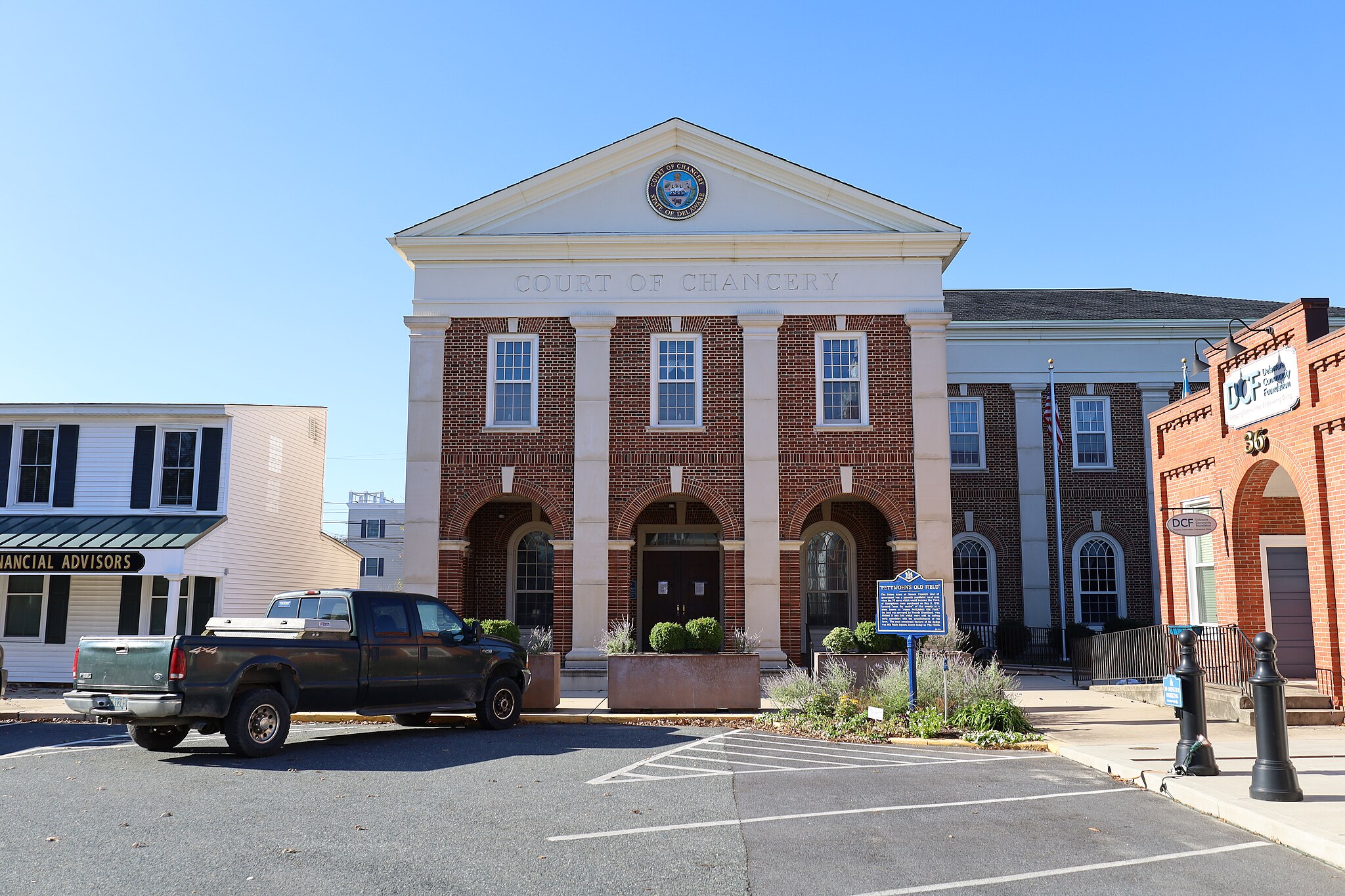
But back to Delaware, which is also bad in other ways. Like all bad states, it’s bad in its own ways. It has a special Chancery Court, geared to adjudicating issues for the companies that are domiciled there. This court is separate and apart from other Delaware courts that provide access to corporate records, and it has its own intricacies that also create unique difficulties accessing its records.
What’s That Court Called?
Delaware’s court structure is not the only complicated or convoluted state court system. Some other states, such as Massachusetts and Virginia, maintain two types of civil courts, requiring two separate searches. You do not need to just determine which county to search, you also need to determine which district within the county to search.
Pennsylvania has a cockamamie system with weird names (that I never quite understand) for different courts, but I make sure to search them all. Cook County, my home county, has a Circuit Court comprised of multiple divisions. At one point, each division had its own index and required separate searches. Now, most divisions can be searched simultaneously. Lack of awareness of the multiple courts may lead to missing key public records.
Pay Up
Which leads us to a bigger way states are bad: the way they keep records from you. Criminal division records in Cook County are not online. This used to be true for other counties as well, but off the top of my head, I cannot think of any. Feel free to let me know. Worse, there are also counties with no online records — civil or criminal. The ones that immediately come to mind are in New Hampshire, North Carolina and possibly Wyoming. When the records are not online, it costs time and money.
States are bad, or counties within states are bad because they make you pay for searches. It can be rather nominal like Los Angeles County, while doing a criminal record check in New York costs nearly $100 per name.
I Want to Wake Up in the City That Never Sleeps
Speaking of New York and court records, that’s another tricky one for researchers. There are two court levels in New York, referred to as local and supreme. Interestingly New York calls its lowest court the supreme court — as in The Supreme Court of New York County (Manhattan). Well, technically it’s not the lowest as there are those local courts, but it’s confusing nonetheless.
New York offers multiple databases for checking said records. One set, I call “web access” because the websites show as “webaccesslocal” and “webaccesssupreme” on their landing pages (at least according to my bookmarks). There is another New York court search website called “Scroll’, which may or may not have different records from those in the New York in the web access supreme court database.
Continuing with New York’s search complexities, it’s nearly as bad as Delaware when it comes to getting basic information on companies registered there. But New York is not alone. Many other states do not cross-reference their company records to officer/director/manager/names. Relief is at hand though, as some (but not all) of these idiosyncrasies can be overcome with paid services like Lexis.
I will say this for New York, if you find a case, you can usually get a decent amount of information on it, including accessing, viewing, and downloading pleadings and motions online. In many other states/counties, online records contain as little as nothing and next to nothing of value, such as not even providing the disposition of whatever lawsuit you may have found.
It’s all Bad, Everywhere, All at Once
Court records and Secretary of State records are probably the two public records I use most, so I am pretty up to speed about the difficulties that confront online researchers. Be aware that state by state, county by county, there are myriad other reasons you may struggle to find what you need. Some counties put their property records behind paywalls. Fictitious name, d/b/a, assumed name, are among the diverse ways one can call sole proprietor businesses, and encapsulates the many ways they can be indexed across the USA. Tax liens, UCCs, there’s the statewide/county specific problem of where and how they are filed — if you know you know.
It is not necessary to know all the worst states or why they are difficult in their own unique ways. Just know that there are a lot of speed bumps on the road to due diligence.
This article first appeared at Robert Gardner’s Manage Risks blog and was reposted with permission of the author.
About the author:
Robert Gardner likes to think he has been performing research so long, credit reports came on stone tablets. Over a long career, Robert has worked with private investigators, forensic accountants, fraud auditors, litigators and others who need vital information to make decisions and react to unforeseen problems. Robert works in all aspects of business research including due diligence, litigation support, fraud investigations, asset searching, and competitive intelligence. He has made inquiries in nearly every part of the world. Well versed in a variety of data collection methods, especially online and Internet searching, he has transformed public record findings into reports, charts, schedules, timelines, and databases to assist in many situations.