

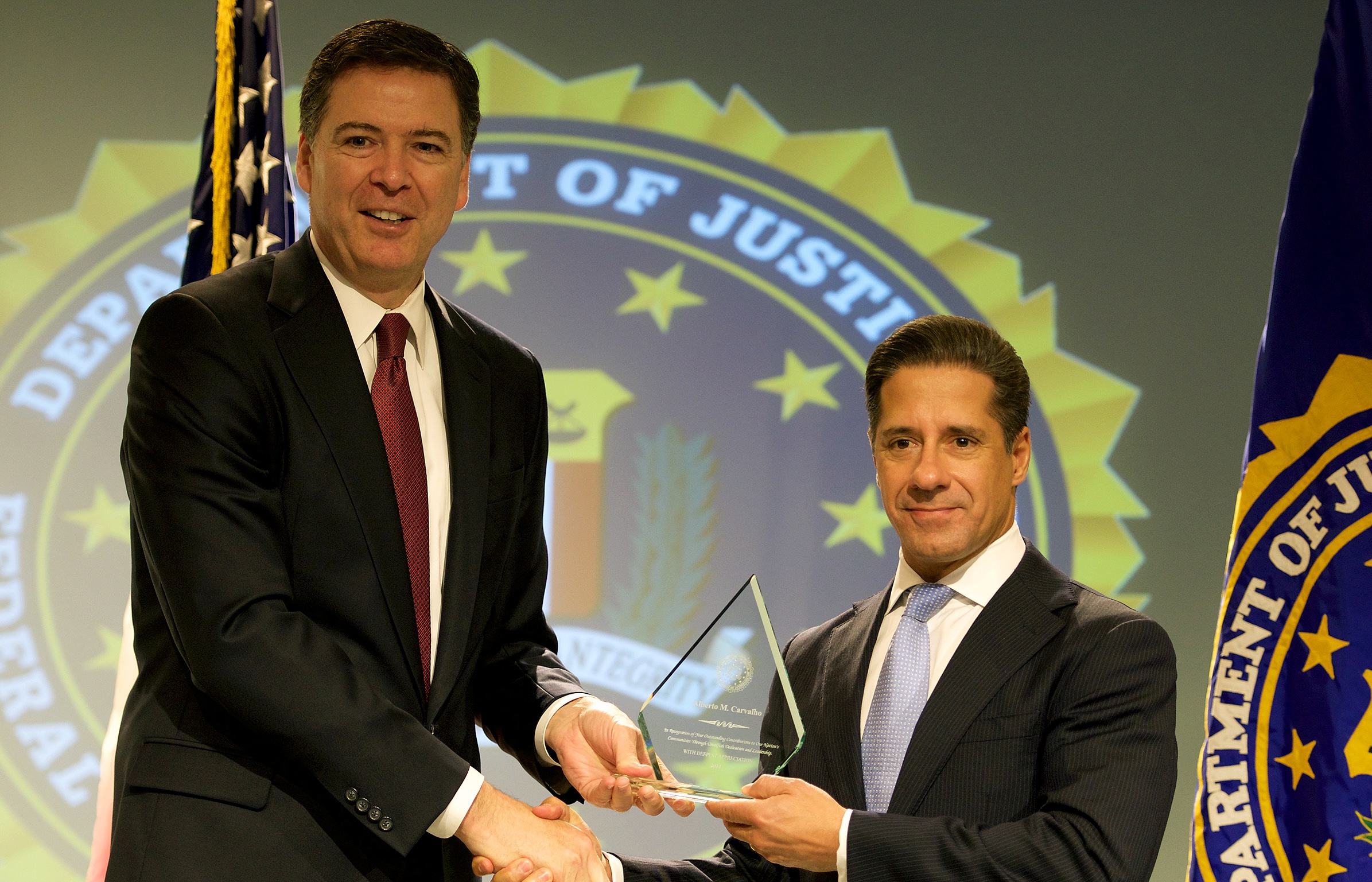

When the facts are sealed, it’s the investigator’s job to read between the lines of search warrants, emergency board meetings, and carefully-worded statements to help clients assess risk.
You have five minutes. Your client is on the line.
They’ve already read the headlines. They know a superintendent is under federal investigation. They’ve seen the press coverage and the public statements. What they need now is not a summary of what has been reported, but a clear understanding of what the record actually establishes, where it doesn’t align with what is being said publicly, and where the gaps introduce risk.
That is the work.
The LAUSD investigation is worth examining — not because it’s prominent in the news cycle, but because it illustrates a recurring problem. The official record is incomplete, the investigation is ongoing, and yet there is already a factual record that can be built, verified, and delivered to a client in a way that supports a decision.
Most people read the news. The job is to read the record and identify where it diverges from the narrative.
The Client’s Problem Comes First
When a client brings forward a matter like this, they’re not asking for interpretation or theory. They need a clear briefing on what is documented, what is reliable, and what might not be.
That distinction shapes how the file is approached. The task at hand is not merely to construct a narrative. It’s to establish the timeline, verify what can be sourced, assess the integrity of the record, and identify what’s missing.
What the LAUSD Record Actually Establishes
The starting point is what is documented.
On February 25, 2026, federal agents executed simultaneous search warrants at Carvalho’s San Pedro residence, LAUSD’s downtown Los Angeles headquarters, and a property in Southwest Ranches, Florida, connected to a former associate. The U.S. Attorney’s Office confirmed that the warrants were judicially approved, and the FBI confirmed that agents were serving court-authorized warrants. The supporting affidavits remain sealed.
These are established facts, but what matters is what they represent. A federal judge reviewed an affidavit and found probable cause that evidence of a crime likely existed at those locations. That threshold had already been met before any public reporting occurred.
The coordinated, multi-location execution is also part of the record. In financial and procurement-related matters, this approach is used to prevent subjects from comparing notes, moving materials, or altering records.
The matter has been described as financial and white-collar in nature, reportedly tied to LAUSD’s $3 million contract with AllHere. The company’s founder has already been charged with federal fraud and identity theft. What is not established publicly is Carvalho’s role in that relationship.
Where the Record May Not Be Reliable
In matters involving procurement and alleged fraud, the documentary record cannot be assumed to reflect what actually occurred.
Contracts, approvals, communications, and financial records may reflect what was intended to be shown rather than what happened in practice. What matters is whether the record is internally consistent, whether timing aligns, and whether expected elements are missing.
Gaps are not neutral. When key documentation that should be present is missing from the record, that absence becomes part of the analysis.
What the Institutional Response Shows — and Doesn’t
Carvalho was unanimously reappointed by the LAUSD board in September 2025. Five months later, after the warrants were executed, the same board voted 7–0 to place him on paid administrative leave following a closed executive session.
What is not explained in the public record is the basis for that reversal within a seventy-two-hour window.
The district’s public statement indicated that it was cooperating with the investigation and had no further information. It did not include an expression of support or a denial.
Prior Record and the Boundaries of Denials
Before the raids, Carvalho publicly denied personal involvement in selecting AllHere as a vendor. That denial is narrowly defined and does not extend to oversight, promotion, or financial relationships.
There is also a prior documented record from Miami-Dade, where an inspector general found that a $1.57 million donation to a nonprofit he founded created an “appearance of impropriety.”
What the Subject’s Statement Adds
Carvalho’s attorneys issued a statement on March 10, 2026, thirteen days after the execution of the search warrants.
The timing reflects a deliberate legal posture. The statement emphasizes future evidence and the absence of charges, rather than a direct denial of underlying facts.
What a Client Needs to Act On
The LAUSD case is ongoing. No charges have been filed, and the affidavits remain sealed.
A client does not need to wait for resolution to assess risk. What matters is what can be established now, where the record is incomplete, and whether those gaps are material.
Most people read what is in front of them. The work is determining what is not there, whether that absence is meaningful, and what it implies for the situation at hand.
Sources:
CNN — FBI serves search warrants at LAUSD headquarters and Carvalho’s home (Feb. 25, 2026)
ABC7 Los Angeles — FBI serves search warrants at LAUSD HQ and Carvalho’s home (Feb. 25, 2026)
KTLA — LAUSD Superintendent Carvalho placed on administrative leave (Feb. 28, 2026)
LAist — LAUSD board places superintendent on leave following federal searches (Feb. 28, 2026)
Fox 11 Los Angeles — New details emerge about FBI raids at Carvalho’s home and office (Feb. 2026)
ABC7 Los Angeles — LAUSD Superintendent Carvalho breaks his silence after FBI raid (Mar. 11, 2026)
LA Times — A charismatic L.A. educator, a connected consultant and the FBI probe of a failed AI company
U.S. Attorney’s Office: CEO Of Artificial Intelligence Startup Company Charged With Defrauding Investors
About the author:
Charles Cohen, CFE, CIFI, is the founder of SilverTree Intelligence Group. He advises Fortune 500 companies, private equity firms, investment banks, law firms, and major insurance companies on complex due diligence, M&A transaction intelligence, executive vetting, fraud investigations, and institutional risk. He previously served as Director of Aon’s M&A and Transaction Solutions Corporate Intelligence practice and as a Managing Investigator at Deloitte. He is a member of the Board of Regents for the Association of Certified Fraud Examiners. Learn more at silvertreeintel.info.