


The Inquisitor
A conversation between Pursuit contributor Kevin Goodman and former CIA Clandestine Service operative, Lindsay Moran
In Part 3 of our series, Moran talks about the efficacy of CIA polygraph tests and the continuing role of old school tradecraft in an era of tech-savvy hacker-spies.
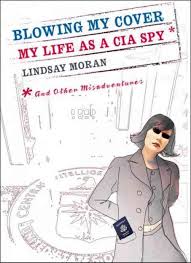 This is the third and final installment in a series of interviews with former CIA case officer, Lindsay Moran. In the previous story, Lindsay offered a few details about her training at “The Farm” and introduced some basic skills that the CIA teaches its Clandestine Service operatives, such as surveillance detection.
We begin this final article by discussing the CIA’s use of the polygraph. We then return to the topic of tradecraft; Lindsay specifically addresses the limitations of technology and why the old-fashioned dead drop may still have a role in contemporary spycraft despite our tremendous technological capabilities.
The CIA Polygraph
KEVIN: How often did you have to get your security clearance recertified?
LINDSAY: I was hired by the Agency in 1997. I had been overseas on a Fulbright Scholarship, and when I came back I had to do a polygraph, and another background investigation because I had been overseas. I don’t think I had another polygraph until I was about to leave the Agency, when I was scheduled for my reinvestigation.
Typically, the reinvestigation is every five years. But when I was there — I don’t know if they were looking for a mole or something — they were doing random reinvestigations. Mine wasn’t random. I was scheduled for one.
KEVIN: I’m curious whether or not they taught you polygraph countermeasures.
LINDSAY: No, they didn’t. The Russians do that. The Agency doesn’t teach you that because they don’t want you trying to beat our polygraph, and if you’re ever being polygraphed by a foreign intelligence agency, then that means you’re a mole.
Other intelligence services don’t rely on the polygraph the way that the CIA does because it’s not as effective for people from other cultures — they might not suffer that typically American guilt and anxiety about being untruthful. And by the way, one of the CIA’s most notorious moles – Aldrich Ames – had no problem passing more than one polygraph, while he was selling secrets to the KGB.
KEVIN: I agree with you. I think it’s more of an intimidation tactic to make you believe we can read your mind so you’ll confess.
LINDSAY: All scientific evidence suggests there is no validity to a polygraph besides measuring your reactions. It doesn’t prove if you’re lying or not, but I think it’s a very effective psychological tool.
Everybody dreaded the polygraph. The guys who had the worst time on the polygraph were squeaky clean — like Catholics who had a tremendous amount of guilt. I stonewalled polygraphers. I wouldn’t give them an inch; that was always the best tactic.
KEVIN: You say you didn’t give them an inch? Would you lie (laughing)?
 LINDSAY: No, I wouldn’t lie, but they’re going to accuse you of lying anyway. What they want you to do is say, “Well, maybe I’m reacting to that question because…” and to come up with some sort of justification. I would just say, “I have no idea what you’re talking about. I’m not lying.” My polygraphs were pretty benign. I had friends that were in there for days at a time.
KEVIN: That would be horrible (laughing).
LINDSAY: It is a grueling, grueling, process. And I don’t think I ever had one that lasted more than three or four hours. But I knew people who were in there for an eight-hour work day, and then they would have to go back the next day.
KEVIN: I would hate to have that job.
LINDSAY: The polygraphers are sort of vilified at the Agency. Nobody likes them. At least as an operative, you’re out in the field doing dirty work and not in an anonymous office accusing people of lying day in and day out. It’s the same MO for every person.
There’s a great book called Gatekeeper by a former CIA polygrapher named John Sullivan. He believes in the polygraph, and he’s professional. But he complains in the book about the CIA polygraphers getting to a point in the 90s where they accused everybody of lying, which really kind of defeated the purpose of the polygraph.
When you know the drill, and you know they’re going to accuse you of lying, it becomes less threatening. If they used that tactic more randomly, they’d probably be able to scare people a little more.
Reports, Receipts, and Accountability
KEVIN: Earlier this summer, when the NSA was in the news a lot, I read an article claiming that if James Bond were alive today he’d be plucking away somewhere on the computer instead of in a hostile country. I’m just curious what you have to say about that.
LINDSAY: There is a lot of time spent on the computer as an operative. What they don’t show in the Bond movies is that anytime you do something operational or meet with an asset — which Bond never does because he’s on his own somewhere drinking a martini, playing cards, or having sex with someone — there’s a lot of paperwork involved. So there is a tremendous amount of time spent writing, probably more so than anything glamorous. For any operational meeting you might have — even if it lasts only fifteen minutes — you’ll have hours of report-writing to do.
KEVIN: I thought it was interesting that you talk in your book about having an asset sign a receipt for money that you gave him. It sounds weird, but I understand the logic of it.
LINDSAY: Yeah, it’s kind of weird. I remember being surprised by that in training. You’re trying to be really secretive, but then you’ve got to give assets a receipt. But it is government funds, and you have to account for it somehow. Certainly in CIA history there have been people who’ve invented foreign agents and were taking the money and pocketing it themselves.
KEVIN: Really? That’s horrible.
LINDSAY: There are very few safeguards against that because the person can sign in any kind of alias that they want.
KEVIN: So you need a receipt, but it can be an alias of their choosing?
LINDSAY: They can sign it Ronald McDonald if they want, as long as you have some piece of paper saying you gave them the money and they received it.
KEVIN: To satisfy the CIA’s internal IRS (laughing).
Technology & Communication
KEVIN: Getting back to the NSA thing, it’s still important to have eyes on the ground and people in foreign countries gathering human intelligence. The whole hack-the-computer thing hasn’t taken away that need, has it?
LINDSAY: No, and even as intelligence collection relies increasingly on technology, human intelligence will always be there — in part because with so much technological capability in terms of hacking, sometimes the safest way to gather intelligence is to have face-to-face meetings. I mean, one of the ways Bin Laden was able to stay out of our clutches for so long was not because he was using high-tech means of communication but instead was using couriers like it was the 1800s.
KEVIN: Yeah, that actually leads to another question I had. How has technology changed tradecraft?
LINDSAY: As late as the year 2002 when I was in the Balkans, I was still making chalk marks on water fountains.
Kevin: Really?
LINDSAY: That’s not to say that that happens everywhere, but sometimes the archaic means of communication are the safest. Because when it comes to email and electronics, there are only so many layers of encryption you can have — everything is vulnerable. So technology has changed tradecraft, but there are also old, reliable, archaic means of tradecraft still in place.
KEVIN: So we still use the old-fashioned dead drop?
LINDSAY: I can’t speak for now because I’m gone; but I would venture to say yes. I’d say that there are CIA operatives all around the world communicating with their agents using very primitive methods — for instance, by taking notes on water-soluble paper and not just typing them on a computer and zapping them off to headquarters.
KEVIN: So case officers have their own discretion in how they communicate with their assets?
LINDSAY: Well, headquarters will provide some guidance, but you really need to come up with a communication plan yourself. You need the communication plan in place in case things go wrong, so there’s a way for that person to get in touch with you and vice versa.
Sometimes the safest way to do that might be to leave a curtain open that can be seen from your balcony, as opposed to any kind of electronic communication.
Ryan Fogle and the Question of Wigs
KEVIN: Something I found interesting about your book is that you talk about wearing wigs as a disguise. Then we have Ryan Fogle, a U.S. diplomat arrested in Russia, and the media made him out to be either incompetent or a rogue spy — a diplomat trying to be CIA — in part because of that bizarre wig he wore in the photo. So it’s as if the CIA would never do that…but then you talk about it.
LINDSAY: Yes, we use wigs. But he was caught with two wigs and a compass — it seemed almost preposterous. When I first heard about Fogle, I thought there was no way this guy was a real operative, because people who go to Moscow receive even more training to operate in that dangerous and hostile environment.
We don’t do things in Moscow the same as we do elsewhere. Moscow is considered a very hostile environment. You can assume, even if you’re not CIA, that you’re being followed, that your house is bugged. Even if you’re just an American businessman over there, the SVR will likely have you under surveillance.
The Russians to this day have an incredibly aggressive service. You don’t just go out there and do a surveillance detection route as you would in the rest of the world. We’re much more cautious and, frankly, more limited over there. So I found it preposterous that he was meeting with an asset with that wig on, but maybe he was just incompetent. I don’t know. I’ve seen my fair share of incompetence at CIA, but that level of incompetence from a Moscow-trained officer would really surprise me.
KEVIN: What, if anything, would you change about the CIA?
LINDSAY: I think the CIA suffers from a kind of insularity syndrome. On the one hand, young operatives are encouraged to “think outside the box,” come up with creative plans and solutions, and to be questioning of the status quo. But in reality, those who are most bureaucratically-minded usually end up having the longest careers.
Also, there is no real accountability. Since no one knows what’s going on within, it’s easy to brush failures under the carpet. Look at 9-11 – the biggest intelligence failure of our time; tellingly, no heads rolled at CIA. We used to joke that there was a kind of “reverse Darwinism” at play within CIA. It wasn’t survival of the fittest, but rather, survival of the most mediocre.
See also:
Part 1: A Former CIA Operative Reveals Why She Became a Spy
Part 2: A Former CIA Agent Talks Spycraft
About the author:
 Kevin Goodman is a freelance researcher and writer. He has a master’s degree from Skidmore College with a focus in cognition, culture, and communication. He also has a graduate certificate in criminology from the University of Massachusetts, Lowell.
His primary academic interest is the psychology of belief and its interrelationship with deception. Kevin enjoys making wine, being outdoors and exploring whatever he finds curious. He lives near Bloomington, Indiana, with his wife and two daughters.