

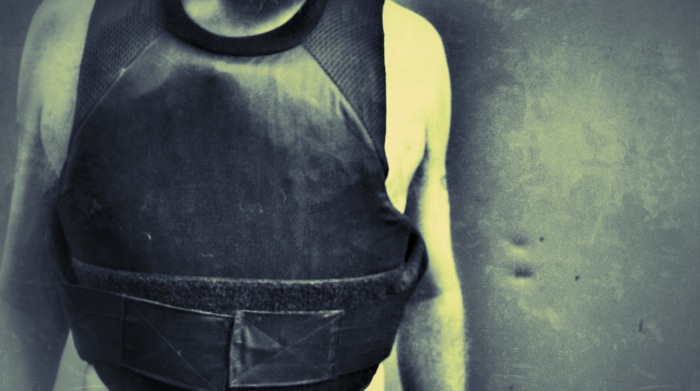

While the topic of personal defense weapons is nearly infinite, we would like to address a few specific topics: Professional Appearance/Command Presence & Identification, Defensive Weapons, Liability & Insurance – all as they relate to the work of a professional private investigator or process server.
Professional Appearance/Command Presence & Identification
We’ve all seen “that guy” who could care less what he looks like when he is working as a private investigator or process server. His thought process is, “Who cares what I look like, so long as I get the job done?”
“That guy” and his mindset couldn’t be further from the ideal of our profession. While not only representing himself as a human being and a professional (term used loosely here for “that guy”), he is also representing his client, the legal professions field and, ultimately, the entire court and justice system. A professional appearance – from a clean and pressed (wrinkle free) polo shirt with clean and pressed jeans or slacks, to a full suit and tie – demonstrates professionalism and commands respect, at least on first contact. However, “that guy” who rolls in wearing the latest in sweatpants/sweatshirt fashion, which double as pajamas and a napkin, will likely be laughed at and not taken seriously. Neatly dressed individuals, who carry themselves well and with an air of confidence (not cockiness!), will possess what is known as “Command Presence” and will more likely get the results they seek.
Identification includes the appropriate attire mentioned above, as well as an ID card or other type of physical identification such as a name tag, badge, quasi-uniform, etc. In regards to the use of personal defense weapons, we’ll focus on the badge and quasi-uniform.
Sure, you want to look cool and tote around a for-real badge that you can order from any number of catalogs or online stores with little or no authentication required. You may even want to wear it on a chain around your neck a la ‘Dog the Bounty Hunter’ while you work. That’s fun, but it’s also stupid.
Without any other recourse or self-protection or preservation method, that badge makes you a target. Bad guys won’t stop to read it, or ask you what it says you are – they will see the badge and assume law enforcement, and will react accordingly if their intent is ill will.
Keep in mind, a cop is killed approximately every 53 hours in the United States. Let me ask you this: when you see a cop off duty (apart from the usual “tells”), do you see them wearing their badge open for all to see? No, you don’t. If you’re going to wear a badge, I urge you to also carry a method of defense: pepper spray, a TASER or, preferably, a firearm (if you’re able to, depending on applicable laws). Also, please don’t wear it around your neck on a chain, as this presents a choking hazard should it get caught on something or should someone get in close enough to grab it. It also doesn’t look professional at all. You’re not on 21 Jump Street.
Consider investing in a “CSI”-type vest, and pin your badge on that, on your left chest (over your heart). Don’t forget a name tape on the opposite side, with your actual name – first initial and last name are preferred, last name is acceptable. DO NOT put a moniker or nickname on there – ‘Tat-2’, ‘Dog’ or anything other than the name your Momma gave you. You may also want to wear a second name tape – below the badge or below your name – which clearly states ‘PRIVATE INVESTIGATOR’ or ‘PROCESS SERVER’ – depending.
Going a step above that, you may also want to have shoulder patches made which bear the title PRIVATE INVESTIGATOR or PROCESS SERVER, and affix those to the vest as well. There are “sleeves” you can purchase for attachment to the vest for this specific reason. Check with your local/state laws regarding patches, their wording, use, etc. Certain words or phrases may be prohibited – i.e: ‘State of ___’, ‘Officer’, etc. While you’re at it, you may as well attach a large, bold-lettered panel of contrasting colored letters (if the vest is black, use white or yellow letters) to the back of the vest which bear the appropriate title ‘PROCESS SERVER’ or ‘PRIVATE INVESTIGATOR’. Again, check your local and state regulations.
These things will make it abundantly clear to anyone around you who you are and what you are doing. This quasi-uniform of a CSI vest is preferred because there are times when you may not want to be immediately recognized or identified until you need to be to effect service. Therefore, the vest can be easily donned and doffed and, if you’re not carrying a firearm or other weapon which is prohibited from being concealed without proper permits, you can put a loose fitting shirt or jacket on over the vest which you can take off quickly to identify yourself. Clear identification can also assist you in court later, should you find yourself as a defendant or plaintiff in a civil or criminal action.
Defensive Weapons
Almost everyone carries a pocket knife, and even some carry pepper spray. Depending on the laws in your local area and/or state, you should be able to do this without any permits while performing your duties as a professional private investigator or process server. When it comes to items like TASERs and firearms, however, many states regulate their carrying and use by private citizens.
Several states do not allow TASERs period, while others do not allow them to be concealed on one’s person. Carrying a TASER on a CSI-type vest, preferably in a dominant hand cross-body draw (i.e: if you are right handed, you would carry the unit on your left side in a cross-body draw position to be drawn by your right hand; if you are left handed you would carry the unit on the right side in a cross-body draw position to be drawn by your left hand), ensures the device is not concealed (be sure to take into account any cover jacket or shirt you may intermittently wear over the vest and items on the vest).
The firearm, if worn, should be securely holstered on the wearer’s dominant hip – this isn’t the “old west”, we don’t cross-draw firearms – in an appropriate retention level holster, suitable for “duty” use but comfortable enough for “plain-clothes” wear. When researching holsters look at the “detective” and/or “plain clothes” wear models. You will find a leg holstered firearm affords too much of a military or SWAT look, and will draw you unnecessary and unwanted attention, as well as opposition from those you interact with. A hip-holstered weapon is inconspicuous and not as readily visible as one worn in a leg holster.
As with any tool/weapon you choose to carry, you need to be comfortable with that tool/weapon to the extent you are confident in your abilities to successfully defend yourself should the need arise. Remember – practice makes perfect, but only if you practice perfectly.
Liability & Insurance
As has been said several times in this article, check your local and state laws before making any decisions on utilizing personal defensive weapons while working as a professional private investigator or process server. You may have the best plan in place, best training, best policies, etc. but if the law says you can’t, it will be all for naught.
Pertaining to the use of defensive weapons only, your business general liability insurance policy most likely does not cover their carrying/use while performing those duties for which you are insured. You will need an addendum to that policy. Your insurance carrier will most likely want to see certificates of training you have completed in the safe use or firearms, deadly force, etc. as well as a force/deadly force policy for your company to which you (and any employees) will adhere and abide by. The more successfully completed training – from a duly authorized/licensed entity – you have on your professional resume’, the more likely your insurance company will approve your policy… and you may even get a small discount.
Be Safe,
Brian & Bob
About the Authors:
Brian has been active in the law enforcement, security, process service and private investigation fields for 15 years and counting including sworn, non-sworn and civilian capacities. Brian is an advocate for safety and professionalism, and makes efforts to increase the professionalism of the process service industry. Holding various instructor level certifications in several physical disciplines, he regularly instructs and facilitates classes on personal safety and self-defense, as well as process serving. Brian is married with two sons and lives in California. He can be contacted at BriscoConsulting@SBCglobal.net
Bob previously served as a Deputy Sheriff for 14 years. Bob has been a licensed private investigator since 1989, and is also a principle of a mid-sized professional legal services firm in the Sacramento area, serving all of northern California. Bob is the author of ‘Introduction to Becoming a California Process Server’, now in its 11th revision, from which he teaches a class by the same name via the California Academy of Investigative Sciences. He also teaches a class on the specifics of Bank Levies, Earnings Withholding Orders and Prejudgment Attachments, and another on Skip Tracing for the professional process server and private investigator. Bob is married with two step-sons and lives in California. He can be contacted at dvuslaw@prodigy.net