


Investigators love to share success stories. But maybe we should talk more about the cases that veer wildly off course.
We PIs love to tell stories about challenging cases and successful “solves.” And why not? We lead interesting lives, and sharing success stories is great for business. I learn a lot from my peers’ notes from the field. But sometimes, I wish we talked about the losses — and the cases that go terribly wrong.
I have a story like that, a case that I still turn over in my head when I can’t sleep. I’ve never shared the details outside of my inner circle. For years, I was afraid that speaking about it would force me to relive it. But now I think that reliving it might help someone else. So here goes.
The Call
It was July 3rd, and I planned a short office day and easy field assignment, so I could beat the holiday traffic and get home to my wife and sons. After reviewing files, I opted for an activity check on a claimant in a workers’ compensation case. Nothing heavy, just a quick recon to verify residence and surveil the area.
I remember arriving at the claimant’s home and thinking the stars were aligned: There, parked in the driveway, were his two known vehicles. I spotted his last name on the mailbox and his wife entering the garage. And across the street was a small strip mall — an ideal surveillance vantage point. I shot video and broke off for the day.
As I got to my vehicle, a call came in from my “free consultation” line. After thinking, Should I just let it go to voicemail? I picked up and heard a male voice: “Hi Ben, I’m really hoping you can help me with a service I truly need. I know it’s Friday on a holiday weekend, but I’m desperate.”
The man suspected his fiancée was seeing someone else. I took a deep breath. After too many emotionally fraught infidelity surveillances, I’d stopped doing domestic casework, except for child custody through law offices. I told the caller that I no longer handled infidelity investigations. “I understand, Mr. Lopez,” he said. “But you came highly recommended by my attorney.” He named an attorney I’d worked for in the past.
I tried once again to dissuade him. Last-minute surveillance with no prep was a bad idea, I explained, and usually a waste of the client’s money. He said money wasn’t a problem — I could name my rate if I started that evening. This guy was not giving up, so I asked him to tell me his story.
Two years before, he’d met a woman online. They messaged virtually for about a month then started chatting by phone. Finally, they dated in person and got engaged. She was attractive and much younger, so he was struggling to separate his suspicions from his insecurity about their age difference. I asked if anything specific had sparked his uneasy feeling about this particular evening. He said that lately, she’d canceled several dates at the last minute. That day, she’d begged off their dinner reservation, claiming she needed to visit her sick mother. He didn’t buy this excuse.
The caller sounded so sincere and vulnerable as he told he this story, then asked me again to please accept the case. I told him I would call him back shortly with an answer.
My wife Eva is always my first call when I am unsure. She knows the business, and she knows me. I asked her how she felt about my spending the holiday evening on this case. “Ben you’re going to do whatever you feel is right, so I’m OK with it,” she said. “Just be safe.”
Being an investigator is not easy, but being the significant other of an investigator is tougher in many ways. Eva is a rock.
I called the client back and told him I’d take the case. I explained the details of our service agreement and the initial payment, and I told him I’d need to be sure there were no orders of protection or anything else that would prevent us from proceeding. He thanked me profusely and agreed.
The Case
I returned to my office, set up the case file, and ran a background investigation on the client, which confirmed that he was the owner of an investment company, lived in a wealthy Chicago suburb, and appeared to have no criminal history or orders of protection in place. I then researched the fiancée. She was about 25 years younger than the client, lived in an apartment in a middle-class Chicago suburb, and had no criminal record. But she did have two civil judgements on record. I took down her vehicle information and printed a photo of her.
I was already regretting my “yes” as I drove to the surveillance location. If I’d stood my ground, I’d already be home, having a nice dinner with my family.
I arrived at the subject’s apartment building, noted her vehicle, and settled into a surveillance position. Before I’d even had a chance to break out the snacks, a young woman in denim shorts and a tank top exited the apartment. I rolled video as she headed for the vehicle registered to my subject. My heart sank as I saw what she was carrying: two folding chairs and a small cooler. She was probably not taking a cooler to visit her sick mother. But she most likely was going to see someone who wasn’t the client, most likely at the July 3rd fireworks display at Chicago’s lakefront.
My regrets deepened. Now I was facing a mobile surveillance nightmare as thousands of people descended on Navy Pier and the beaches, all carrying chairs and coolers. I documented her stop at a liquor store, then managed to stay with her all the way to the lakefront. Another miracle: I found a parking spot about half a block from where she parked her SUV, sprinted into the crowd, and somehow found her.
Now I was facing a mobile surveillance nightmare as thousands of people descended on Navy Pier and the beaches, all carrying chairs and coolers.
At the gate for the lakefront on North Avenue, the subject met a young male. They sat, drank wine, and ate, and were not shy about sharing displays of affection. I watched and documented all this with a covert camera, musing about how sketchy I must look with no blanket, cooler, or companions. I stayed until they left, followed them to her vehicle, then tailed the SUV to a high-rise condo, where they drove into the secured underground parking garage. There wasn’t much more I could do but wait nearby. I set up another surveillance position and now had to break the unwelcome news to the client.
This was the part I hated, and the reason I stopped handling these cases.
The Bad News
I called the client and warned him that I had some difficult news. I described what I’d observed and told him I was waiting for further activity. I could hear the heartbreak in his voice as he thanked me for taking the case and told me I could break off surveillance for the night. He told me to charge whatever I wanted for the investigation. I replied that I’d charge him my standard rate, but with an additional fee for same-day service, and I promised him a report as soon as the holiday weekend was over.
A report was not necessary, he said — he had all the information he needed. “Every client gets a report,” I said, reassuring him that if he changed his mind, the report would be on file. Something told me to keep him on the phone — I’ve never been the guy to drop bad news and just hang up. We chatted about his company and mine, our families, and current events. He thanked me again and said that, thanks to my work, he knew it was time to move on. We said goodnight and ended the call.
Eva, my sons, and I enjoyed the holiday weekend with family and lifelong friends who are like brothers. Eva and her sister cooked incredible food, and we had plenty of cold beer and tequila on hand in the backyard Tiki Bar. Life was good. We enjoyed what we all sometimes take for granted: family, friends, laughter, love, and support. Those weekends always seem too short because they are.
I could hear the heartbreak in his voice as he thanked me for taking the case and told me I could break off surveillance for the night. He told me to charge whatever I wanted for the investigation.
On Monday, I reviewed video and wrote my report. My mind kept going back to the pain I’d heard in my client’s voice. Those conversations are always difficult, and I remember each one. I finished the report and uploaded it to my storage along with the video.
When I got to the office on Tuesday, the receptionist informed me that there was a police detective waiting to speak with me. This was slightly out of the ordinary but not too unusual for my line of work. I asked the receptionist to send him to my office.
He came in and introduced himself as a detective from the same suburb where my emergency infidelity client lived. My heart started racing. I took a deep breath and asked the detective how I could be of assistance. He asked me how I knew my client. I politely told him that my service agreements stipulated confidentiality, and that I couldn’t disclose any information without a subpoena or my client’s permission. He broke in, “Are your agreements still valid if your client is dead?”
I sat down heavily and took a minute to absorb this. The detective showed me a police report stating that my client had committed suicide by hanging himself. The woman who cleaned his home found him two days later. After a long silence, I asked the detective why he’d contacted me. He said my phone number was the second-to-last number on my deceased client’s phone.
I asked the detective who my client had called last, just before he ended his life.
Of course, that last number was the fiancée’s. The detective said he’d talked to her, and that she’d felt horrible for being at her mother’s instead of with her fiancé that night. “She’s a liar,” I said angrily. I told him about my calls with the client and what I’d observed during surveillance. The detective said he didn’t think there was any foul play, but he had to explore the possibility. What I’d told him, he said, might help him pressure the fiancée to tell the truth.
He didn’t have to apply pressure, I replied. He could drop my full report and video on her if he wanted to.
The detective reviewed the report and the video, then looked up and smiled. He said he’d request it through proper legal channels and asked that I not destroy it. We shook hands on it.
The Aftermath
After the detective left, I sat in my chair in disbelief. Questions raced through my mind: Did I miss something in my client’s calls that I should have recognized? Did I keep him on the phone long enough after delivering the bad news? Why didn’t I try to identify the male paramour? Did my background work miss red flags about possible foul play?
I’ve been a private investigator for more than 25 years. I worked with the sheriff’s department and in the infamous Cook County Jail. I recently had a firearm pointed at my face while conducting what I thought was routine work. I’ve been around death, interrupted suicide attempts, and handled things that no one should ever have to. But this case hit me differently. This was haunting me.
The detective followed up to tell me that he’d presented my video to the fiancée. She broke down crying and admitted to the affair. She also disclosed that my client had left a message on her voicemail the night he committed suicide, saying that he loved her, she had broken his heart, and he did not want to live anymore. She’d lied because she felt guilty and ashamed.
The detective asked how I was doing. I told him I was struggling with racing thoughts and an awful feeling that I was somehow responsible for the man’s death. He kept me on the phone for a while, chatting about people we knew in common at the sheriff’s department. I thanked him for updating me and ended the call. He had been abrupt before, but he turned out to be a kind and decent man. I was grateful.
The detective asked how I was doing. I told him I was struggling with racing thoughts and an awful feeling that I was somehow responsible for the man’s death.
It was now time for me to try to get back to “normal,” whatever that meant. I returned to work, but I couldn’t stop ruminating. A few months later, a man called the office and identified himself as my deceased client’s younger brother. My heart dropped. What could I possibly say to this man that might lessen his pain? He asked if he could have a minute of my time. I told him I had all the time he needed.
But I was wrong about the nature of the call. He’d wanted to talk to me after speaking with the detective, who mentioned me and how my work was helpful to his investigation. The brother had immediately thought, “That private investigator must feel terrible about the suicide.” He’d called to reassure me that that my client’s death was not my fault. His brother had a well-hidden drinking problem and was fighting other demons. The family had pleaded with him to get help, but he refused. The caller told me that it would have been difficult for anyone to see through the façade of polished, successful businessman to the troubled alcoholic under the surface.
That was a comfort. But I told him that I did feel some guilt. We spoke about my conversations with his brother, and he thanked me for trying to comfort him and cooperating with the detective. We ended the call and never spoke again. I still think about him from time to time. The kindness of that call still floors me to this day.
Reflections
Most people do not understand what a bad day at the office means for people like us. How can we decompress after the sudden flashes of violence, the everyday tragedies and cruelties, and the cases gone wrong that stay with us forever? Sometimes an hour at the gym just doesn’t cut it.
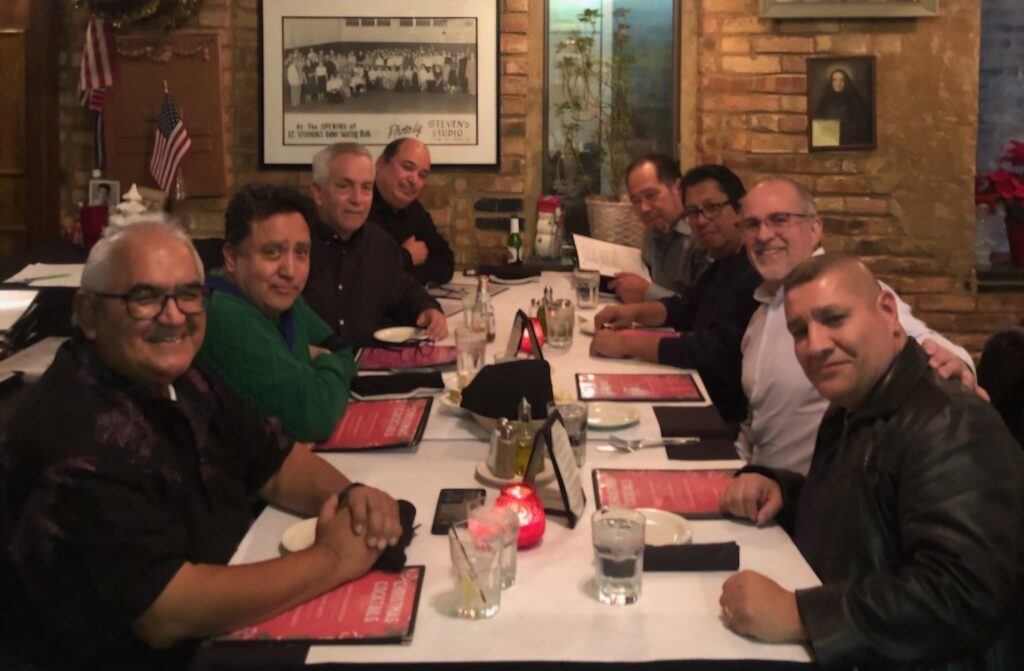
I feel fortunate. I have a large group of friends I’ve known for over fifty years. We grew up together. Several are retired law enforcement or firemen. We get together often to discuss life, vent, and speak of the things we can’t discuss with anyone else. These friendships are vital to my mental health. I’ve been able to unload much with my brothers, but still, this case stays with me. You will not see mention of it on my website. It will not be a social media status. It will not be a Google review. But it is there. It will always be there.
Be safe out there my fellow investigators, and remember, my number is (312) 204-7184 if you ever need to talk.
About the author:
Ben Lopez was born and raised in Chicago. He’s a licensed private detective with over 25 years of investigative experience and is the owner of Verify Investigations.