

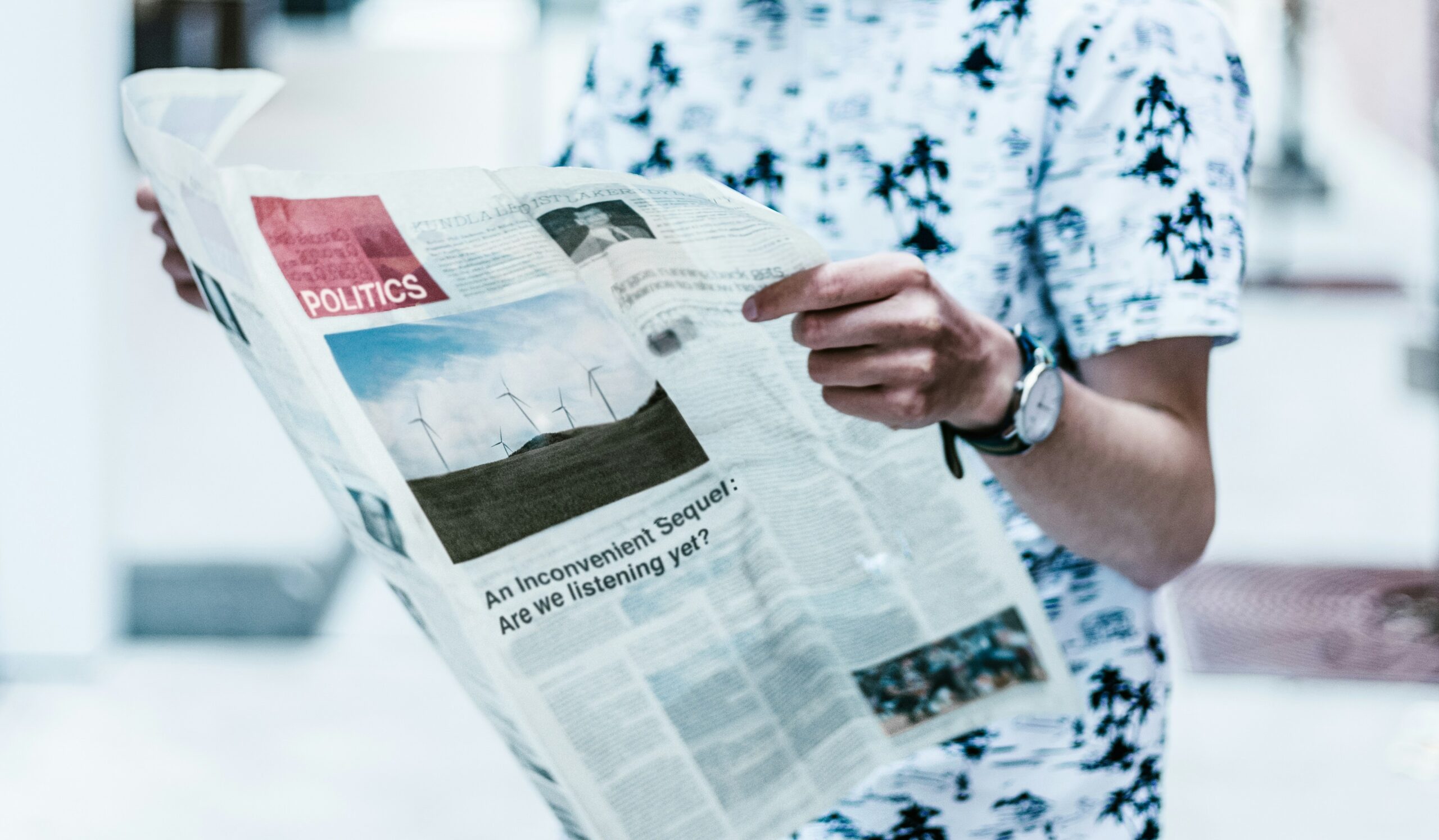

Searching online news can fill in the gaps of a background investigation. A little media literacy can help you sort good information from bad.
As investigators, online research is an important part of our work, including public records and news. We pay a lot of attention to public records, but unfortunately, news searching often means quick negative news scans or using just what’s found on the free web.
But a thorough news search, one that encompasses free and free-based sources and covers both the good and the bad news, takes an investigation to another level. Searching the news helps us find what isn’t in the public record. It fills in the gaps and shows us, in many cases, a more complete picture of our subject.
Unfortunately, the news is often filled with bad information — misleading, biased, questionable facts — aimed to agitate, not inform. Rather than skipping the news, though, take some time to learn how the truth can be manipulated or slanted, and how to assess the reliability of news stories and media outlets.
Here are four ways news might distort the truth:
Misinformation
The news sometimes contains unintentional false, incomplete, or inaccurate information or content. It’s published and shared by those who don’t realize that it’s false or misleading. This unintentionality is what distinguishes misinformation from other methods of spreading bad information. It’s easy to do, especially in an era of breakneck news cycles, so make sure you verify facts before sharing.
Disinformation
The difference between misinformation and disinformation is that, with disinformation, those false or misleading facts are deliberately created and spread in order to deceive or mislead. In a classic case of disinformation, an investment firm produced a video that used an actor to play the role of the company’s CEO with the goal of intentionally hiding leadership identities. So, when investigating a company, don’t rely on company-supplied information.
Malinformation
Malinformation is based on truth but may be exaggerated or presented out of context. Generally, it’s information that’s designed to stay private and is shared with the intent to attack an idea, individual, group, organization, country, or other entity. The 2015 Ashley Madison data breach is an example of malinformation. In these types of cases, where the data was intended to be private and is now public, investigators need to decide how to ethically use this information.
Deepfakes
With the help of artificial intelligence, creating fake images, video, or audio that are nearly indistinguishable from real ones has never been easier. Deepfakes can be used to manipulate facial expressions, replace faces, or synthesize speech, so a certain pop star can appear to be endorsing a particular candidate. Lots of tools detect deepfakes, and sometimes putting the questionable news story into a larger context can help you to determine whether something is likely to be real.
With so many risks involved with online news searching, I’ve compiled this checklist for evaluating sources and findings:
Accuracy
Look for the original source of the news. I prefer to use sources that reveal their sources, because the original tends to be more accurate. If the source info is not readily available, is there someone — like an editor — you can contact? Avoid using news that lacks this level of transparency.
Authority
What are the author’s qualifications? Does the news come from a reputable publisher that incorporates editing and fact-checking into its news-gathering process? Look for what other sites send you to this site. That’s one reason I prefer using fee-based news databases rather than just the free web, because the database vendors vet their sources.
Objectivity
What’s the purpose of the media story and its source? To inform? Persuade? Advertise? Look for sponsor names or other hints of bias. Make sure facts and opinions are clearly separated.
Date
Is this current or historical news? They each have their place in investigations, so make sure you’re using the right one. News stories often get updated so check that you have the most recent version.
Coverage
Does this article contain information, facts, or leads relevant to your investigation, or is it merely “interesting”? Avoid data dumps and make sure what you learn from the article serves a purpose. Just because you found something doesn’t mean you should use it.
Conclusion
News stories fill in gaps and add color to your investigations. But news searching can be challenging, because it’s sometimes hard to tell what’s true and what’s not. Avoid the traps of manipulated news by arming yourself with additional information, context, and a truth-vetting process. Most of all, understand how the news can often be distorted and what to consider when choosing what facts or leads to use in your investigation.
Want to dig deeper into online news searches? Check out Marcy’s class at PI Education, “Searching Online News for Due Diligence and Background Investigations.“

About the author:
Marcy Phelps is a private investigator, Certified Fraud Examiner, and research expert, specializing in fraud prevention, professional research, and research training services that help clients find and use strategic business information. She founded Marcy Phelps & Associates (formerly Phelps Research) in 2000 after obtaining a master’s degree in library and information services from the University of Denver.