



It’s not too late to hone your social media marketing savvy, even if you’re late to the game. The first step, of course, is to sign up for Facebook, Twitter, and LinkedIn accounts, if you haven’t done so already.
(If you’re a total newbie to social media, see L. Scott Harrell’s PursuitMag overview of the most popular social media networks, including the pros, cons, and best practices of each.)
1. If you’re just signing up for social media accounts, be sure to fill in all the blanks.
When you create a business page on any social media site, be sure to fill in all the blanks, including uploading a high-quality image (something you own and have the right to use), composing an intelligent “about” section or business description, and adding relevant links to your business website, information about who and where you are, and contact information.
If applicable, be sure to fill in details such as business hours, address, and a menu of services you provide.
2. Start following other users and pay attention to what works for them.
Look for professionals in the industry whose Facebook and Twitter feeds have a number of followers who regularly engage them in meaningful online conversations about issues in our industry. Pay attention to how they use social media and what works best for them.
A great place to start is the Top 100 Investigators on Twitter list at PINow.com. Follow a few of them, and start listening to what they have to say before you start posting.


3. Say and share interesting things with actual people. (Don’t overdo the self-promotion.)
One thing about the investigators on that Top 100 list: They’re great at talking into the either and getting people to talk back. They share news, articles, and occasionally, their opinions about issues relevant to our field, such as criminal justice reform, hacking and computer security, crime and fraud, and changing regulations related to PI licensing, drone flying, or GPS tracking, just to name a few.
Most of their posts and tweets are about information sharing, not self-promotion. They congratulate their PI colleagues on awards and milestones, and they share articles and posts by other investigators whom they respect.
When they do promote themselves, it’s usually to let followers know about something valuable they’re doing, such as speaking at a conference, teaching a webinar, or publishing a new article. Outright promotional posts and tweets such as “We offer 24-7 on-call surveillance to our customers in 3 states and 41 counties” rarely contribute anything to the bottom line.
This business can be isolating at times, so we find social media to be a useful way to connect to the wider investigations community.
4. Post consistently, but vary the type, tone, and content of posts.
On the PursuitMag Twitter and Facebook feeds, we’ve seen a steady increase in engagement over the past few years. We’ve tried to post consistently (usually about three times a day) and to make those posts interesting and useful. If we don’t find an article valuable, we won’t share it with our followers.
We share articles on a pretty tight range of topics, from criminal justice, law, forensics, and police work to news of the intelligence community and military and anything related to surveillance, security, spying, and crime, including great writing by our colleagues who have blogs or write for other publications.
Sometimes, we’ll break up the serious-news cycle with fun stories about investigators or spies in pop culture and literature, bizarre true crime capers, and the occasional, illegal antics of a few of our fellow PIs in the news.
Of course, we share our own articles from PursuitMag. But we try to be sure that fewer than 25-30% of our posts, overall, are shares of our own content. You wouldn’t want to be stuck at a party with someone who spent the entire time talking about himself, would you? Nobody would.
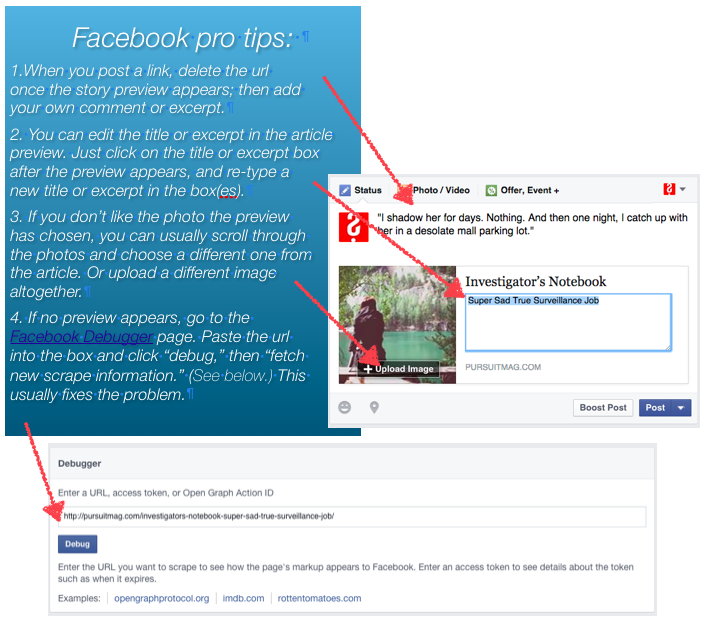
5. Avoid politics and religion, rants and snark.
Of course, our social media strategy isn’t always 100% on message, nor do we always succeed in finding content that gets people talking. But we take our followers’ trust seriously, so we try our best to share good content in good faith, and to respond to disagreements or complaints about our posts with respect and courtesy.
We do not engage with trolls. We do try to avoid ranting or posting anything that might be construed as overtly political. But we don’t mind sharing articles that are thought-provoking or even controversial.
6. Be efficient. Don’t spend too much valuable work time on social media.
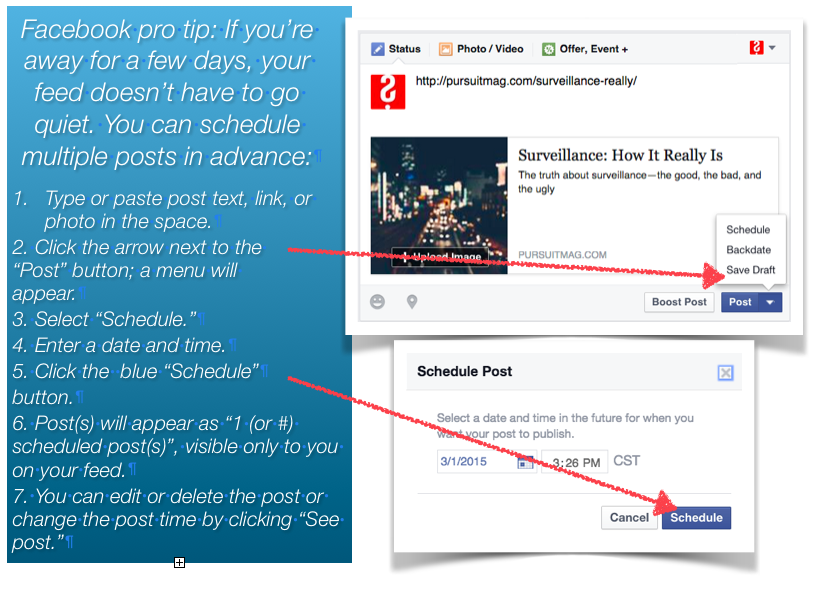
Setting aside a half-hour at the beginning of the week to schedule 6-10 posts in advance can help you be a more efficient social media marketer. You may also want to create rules for yourself about how much time you allow yourself to spend surfing the networks. If you’re scrolling down the feed and suddenly find that a half-hour is gone, it’s probably time to get back to work.
Social media can easily become a wormhole into which time and energy disappear. “Likes” and retweets can become addictive, if you’re not careful. “Views” and other engagement metrics can start to feel like affirmation and become an end in and of themselves.
Remember: Social media engagement can be useful for your business, but it is not a measure of your value as a human or as a professional. Social media is a means, not an end. Sure, check metrics from time to time, to help you get a sense of what kinds of posts work best and what times of day are most active.
But don’t obsess. Glance at the numbers and move on to the real work of investigating.