

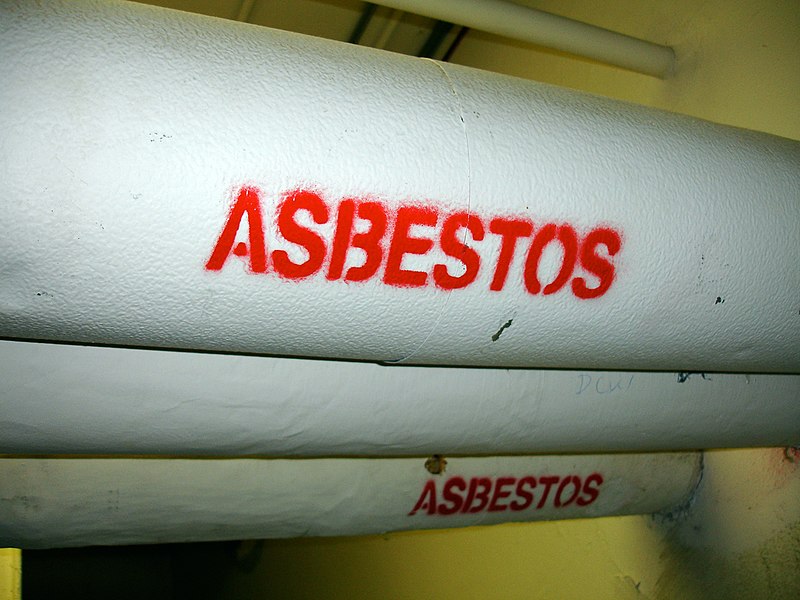

Investigating asbestos exposure claims for the defense means traveling decades back in time to research the details of a plaintiff’s life and work.
Asbestos, a naturally-occurring fibrous mineral used in construction materials for its strength and heat resistance, has a well-known downside: when asbestos dust is inhaled, it can cause cancer and other serious lung diseases.
Asbestos, a Greek work meaning “indestructible,” has been used for thousands of years as an insulator. Two millennia ago, Roman scholars noticed that slaves who mined it got sick with a mysterious ailment. The U.S. government acknowledged its danger to workers early in the 20th century. But for decades thereafter, many in the industry didn’t take the threat particularly seriously.
According to the CDC, more than 45,000 people died between 1999 and 2015 of malignant mesothelioma, a cancer almost exclusively caused by inhaling asbestos fibers. Many of these deaths stem from exposures of decades ago, but new exposures continue to occur, often the result of renovating or demolishing old structures. Although its use has been severely restricted, the U.S. has not banned asbestos outright.
Hence, people suffering from illness due to asbestos exposure now seek damages from product manufacturers. Asbestos defense investigations research the validity of these claims and seek out possible alternative causes for the plaintiffs’ illnesses.
Background
Asbestos is a versatile mineral that has long been used in commercial products such as roofing materials, gaskets, pipes, drywall, and friction products, to name a few. Laborers, contractors, carpenters, plumbers, electricians, and other workers have used products containing asbestos for decades. Some were warned of the dangers, others were not. Manufacturers knew, or should have known, of the risks, and many failed to properly warn consumers of how to protect themselves.
Part of the defense counsel’s job is to understand the relationship between the plaintiff and their use of the product, to determine what is true. Asbestos defense investigators supplement this understanding by conducting robust investigations which examine both a broad view of a plaintiff’s life, as well as focusing on specific exposures.
Exposures to asbestos are as varied and complex as the anguished individuals who have filed suit. The most common obstacles investigators face when researching decades-old exposures are locating surviving records and identifying relevant witnesses with dim recollections.
An experienced investigator is an asset to the defense team by navigating these obstacles and helping answer such questions as:
- Did the plaintiff actually use the product?
- Was it used as intended?
- Was the plaintiff aware of the hazards and failed to take adequate steps to protect himself/herself?
- Was the plaintiff exposed to other products or materials that might have caused the illness?
The passage of time creates the biggest obstacle of all to answering these questions. Evidence — in the form of documents, buildings, ships, vehicles and more — is often long gone; memories may have faded or disappeared altogether.
Research and First Steps
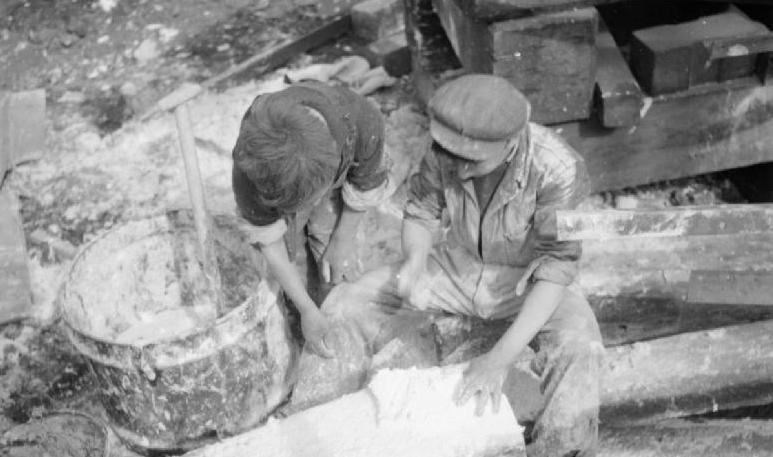
The defense team’s goal is to find any evidence that might rebut the plaintiff’s claims. The time between exposure and diagnosis of mesothelioma — on average, 40 years — means that investigations often focus on details that occurred decades earlier, over a broad time frame. In fact, thorough research of a potential exposure to asbestos may range from the plaintiff’s birth to only a few years before the suit was filed. Therefore, knowing where to look and how to request relevant documents is a fundamental part of preparation.
A good starting point is to find newspapers, books, magazines, newsletters, building permits, obituaries, architectural specifications, or asbestos abatement records from the time of alleged exposure. Tucked away in a file folder containing newspaper clippings, you might find an unindexed news article mentioning asbestos waste used as fill in the new baseball field. Saved advertisements or news articles from a local newspaper may identify employees of a hardware store where the plaintiff claimed to have purchased an asbestos-containing product. Names of former neighbors not found in a current database can be found in an old street directory. Local libraries can be a treasure trove of information if you’re patient and know where to look.
Local libraries can be a treasure trove of information if you’re patient and know where to look.
Some helpful information can be found online, free or through paid databases. Public archives can be inconsistent, but are at times surprisingly helpful. Periodicals and other printed materials, both old and new, are scanned into databases daily and made available on the web. Some public online records are updated frequently. An item that was nonexistent one day might become available the next. But even today, historical information is not always stored electronically. Often the best places to look are libraries, town halls, and historical societies in the plaintiff’s community. Finding relevant documents is a constant challenge. You might not know what’s available until you start searching.
In my experience, in-person requests and inspections of records yield greater results than online searches. In one case, a building-department clerk faxed a limited number of records with inconclusive findings in response to a request sent by a law firm. But when I visited in person, the clerk found more documents, some of which rebutted the plaintiff’s assertions — by showing that a third-party contractor (and not the plaintiff) completed a home renovation project.
In this situation, a faxed record request fell short. The personal interaction with the clerk raised the stakes for her and won us her full cooperation on behalf of our client. Face-to-face interactions and polite questioning are often more fruitful than remote requests for information.
But in certain cases, as with any investigation, you may need to file some strategic Freedom of Information Act (FOIA) requests to get the data you need. (Go here to learn the basics of making FOIA requests.)

Developing Witnesses
Identifying, locating, and interviewing witnesses is crucial for the defense. Whether you’re speaking with a keeper of records about document retention, or with the plaintiff’s co-workers about their recollections of events, you’ll need tact and patience to gain the person’s cooperation. Diplomacy is an investigative superpower when conducting interviews. A janitor at the company might have more relevant information to share than the owner does. Anyone could be a key witness with valuable testimony to offer.
The most important witnesses in asbestos cases are often quite advanced in age. Be considerate of this population’s potential cognitive decline as well as other limitations, such as hearing and memory. Engage people with these limitations in casual conversation first, to evaluate their suitability for a potential trial or deposition.
When approaching potential witnesses, explain what the lawsuit is about in clear, simple terms. Some witnesses can’t understand how a person exposed to hazardous materials decades earlier is now able to file a lawsuit. Explaining complex fact patterns in layman’s terms will help witnesses understand why you’re asking certain questions, may establish rapport, and might even encourage them to cooperate. Follow-up inquiries with witnesses throughout the investigation may yield additional information.
Alternative Exposure
To discover another way the plaintiff could have been exposed to asbestos, research former work sites, residences, schools, and neighborhoods. Look for records linked to the abatement or removal of asbestos from these locations — this may reveal a previously unknown source of exposure. In one of our cases, records from a state labor office revealed that a plaintiff claiming residential exposure to an asbestos-containing joint compound had actually worked in a manufacturing facility that contained large amounts of asbestos.
I found correspondence from the 1960s between state regulators and managers of the facility that discussed their concerns about airborne contaminants. Vibrations in the factory were causing asbestos insulation from overhead pipes to flake off and pollute the air. The records also helped identify potential witnesses whose testimony could have been just as damaging as the records themselves.
Sometimes, evidence of a potential alternative exposures is not tucked away in a regulatory agency basement. A simple Google search of the plaintiff’s childhood home might reveal its proximity to an Environmental Protection Agency Superfund site. Asbestos debris was sometimes carelessly dumped in neighborhood landfills. Winds blew contaminated dust near schools and homes. Other times, asbestos was used as fill around residential and commercial properties.
Due to its former popularity and practical uses, asbestos is now often found hiding in plain sight.

Conclusions
Asbestos defense investigators are like time travelers. We journey back into the day-to-day lives of people working and living amongst a variety asbestos products a generation or more ago. Due to the popular use of asbestos, we’re able to identify alternative sources of exposure the plaintiff never knew existed. In our visit to the plaintiff’s past, we discover the full story, one that contradicts testimony. The evidence we collect frequently tells a new narrative which is both tragic and true.
About the author:
Jed Mahoney is licensed as a private investigator and attorney in Massachusetts. He’s been investigating product liability, toxic tort and asbestos exposure cases for more than decade. He can be reached at j-mahoney@j-mahoney.com. Website: www.j-mahoney.com
Sources:
“Asbestos Statistics and Information,” USGS
“Massachusetts Superfund Sites: Too Close and Too Toxic for Comfort,” Nu Sci, Nov 29, 2014.
“Superfund Site: Raymark Industries, Inc. Stratford, CT Cleanup Activities,” EPA
“Asbestos Deaths Remain A Public Health Concern, CDC Finds,” NPR, April 11, 2017.
“The stunning truth about asbestos use in the U.S.,” PBS, Mar 13, 2019.