


Three Key Factors to Consider When Undertaking Rural Surveillance
As every private investigator knows, surveillance is never as easy as it looks in the movies. Monitoring someone’s activities without being detected by the subject or others is a skill developed over time and enhanced by an ability to think fast and outside the box.
No educational program that I know of will prepare you for the many challenges of conducting surveillance. The best education is experience — lived and shared. A great resource for learning from the experiences of our PI colleagues is Pursuit Magazine, which has dozens of helpful articles on surveillance by investigators all over the world. I have personally implemented recommendations from some of these contributors in my work with our investigative firm.
And now I’m adding my $.02 to that deep archive. This article will explore three factors to consider when undertaking rural surveillance: planning, implementation, and risk management
Planning:
Every successful surveillance investigation requires a customized plan — which needs to occur before an investigator even thinks about getting into their vehicle. This is especially true for rural investigations, which present their own special difficulties. Planning an operation in a rural setting should include several key factors:
- Where will the investigator reside during the investigation?
- How will the investigator operate in a rural area without raising the suspicions of residents?
- What specialized equipment will be required in order to safely and successfully complete the surveillance operation?
These three points will be explored in detail in the following section.
Implementation:
Where to Stay
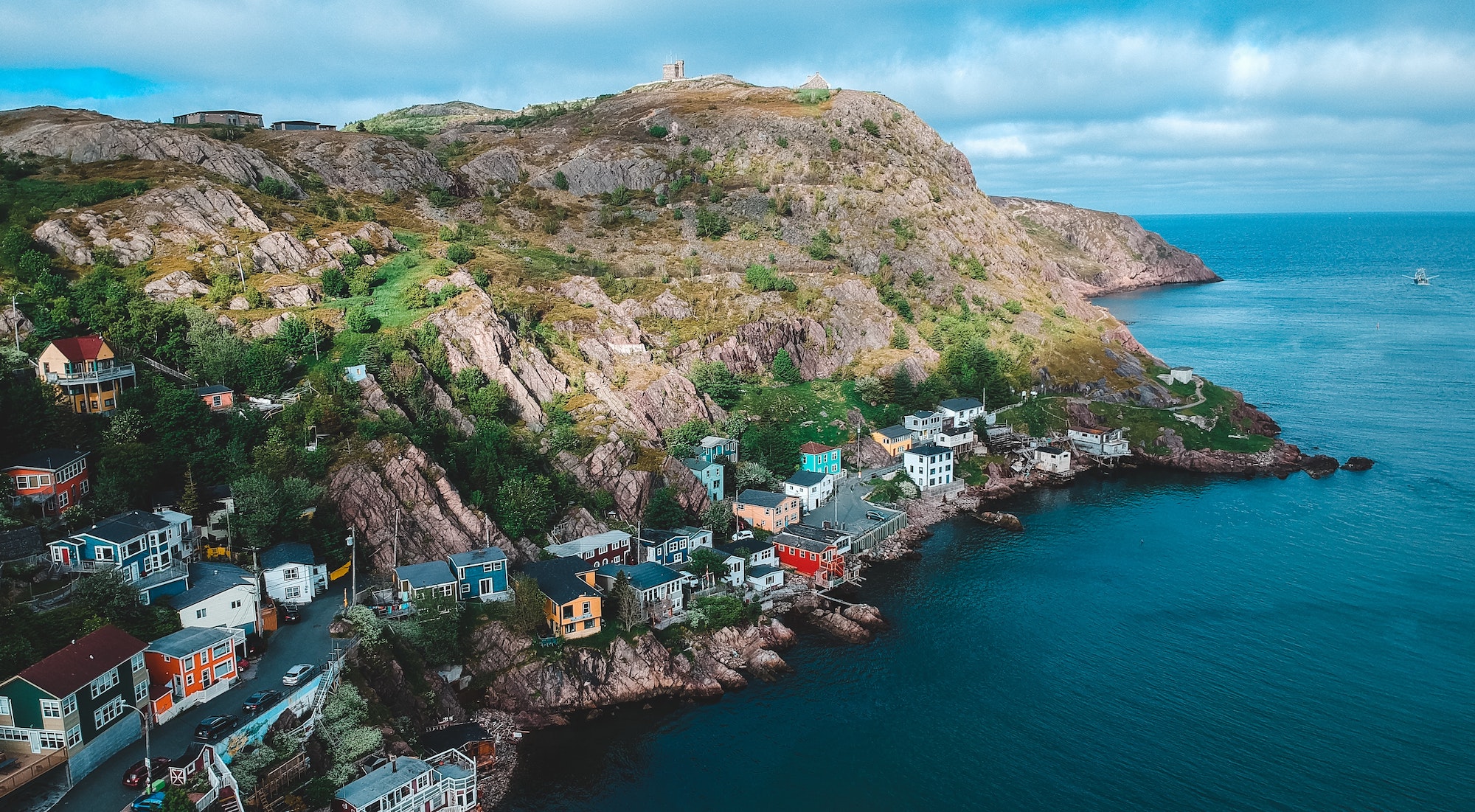
When choosing where to stay during a rural surveillance operation, options will be limited. You won’t be staying at a 5-star hotel — at least not in rural Newfoundland, where we are based. Often, our only choice is an AirBnB. These work well for us in most situations, especially if we have enough notice to book something near our subject. The closer to the subject we can get, the better. Because clients often retain us for a finite period of time, usually 3-5 days, staying near the subject lets us minimize drive time and maximize time on direct surveillance.
An AirBnB can even bolster a cover story for our presence in the community: I’m just here taking a break from city life! And you might even gather important details about the community by talking to the AirBnB host. They often cost less than hotel rooms (or are at least competitive). And if you’re lucky enough to find a accommodations with a view of the subject’s residence, then you’ve just significantly increased your chances of a successful operation.
If there’s no AirBnB (or other such rental property) in the area where your subject lives, the next best thing is renting a cabin somewhere nearby.
Pro Tip: Rural communities are tight-knit. Avoid booking accommodations in the name of the investigations firm – your accountant will understand.
Here’s a caveat to the above comment about a cover story: You’ll need to think in advance about how to explain your presence in this small community over the next 3-5 days. As I mentioned in the pro tip, rural communities are tight-knit, and news travels fast. Assume that people will notice the visitor and perhaps question your presence, especially if the area doesn’t see many tourists.
We have some go-to recommendations to help overcome these obstacles.
Choosing Your Surveillance Point
You’ll want to set up your surveillance point in an area with a direct view of the subject’s property, obviously. If the landscape permits a long view, an ultra zoom lens can give you the advantage of distance. If obstacles require a naked-eye perspective, things get a little bit trickier.
Either way, if you’re going to hide in plain sight, you’ll need to play the season to your advantage. In late November and December, choose a pickup truck with tinted glass for surveillance. Dust off that axe, because you’re going need a makeshift Christmas tree stand with trees for sale if you’re going to sell this cover story. You probably will not sell a single tree and may even be snickered at. But better to be viewed as the town fool than made as a private investigator.
Whether you’re selling worms for fishing or pushing homemade pies, jams or fresh tomatoes, be ready to be questioned, and be ready to give believable answers. The success of the investigation depends on it. This is a great time to use those company vehicle magnets I mentioned in a previous article, the ones that say “Santa’s Trees” or “Granny’s Pies.” Also, bring along a Square card reader ,just in case the market is hot!
We have no advice for you about who to con into baking pies or canning jams for you. Good luck with that!

Risk Management:
The third component of planning rural surveillance is choosing the right equipment to keep you safe while still allowing you to capture footage of the subject.
In our experience, most rural surveillance operations involve subjects who are involved in an injury claim with either an insurance company or workers’ compensation board. The basic premise of these cases is that an injury is being claimed that limits the subject’s ability to engage in certain strenuous activities.
One such activity that’s popular in rural areas presents a unique subset of risks for the surveillance operative: hunting.
Common sense should prevent any investigator from following an armed subject into a wooded area. Compounding this risk is that covert surveillance requires remaining unseen, which rules out wearing the kind of hunter orange gear that can prevent you from resembing live game.
I can imagine so many ways that this scenario could play out with disastrous consequences for the investigator.
This might be a job for a surveillance drone.
As long as an area is not protected by privacy laws, a surveillance drone can keep eyes on the prize from a safe distance. And although rifle bullets are no better for the health of drones than for the health of private investigators, we will opt for risking the drone every time.
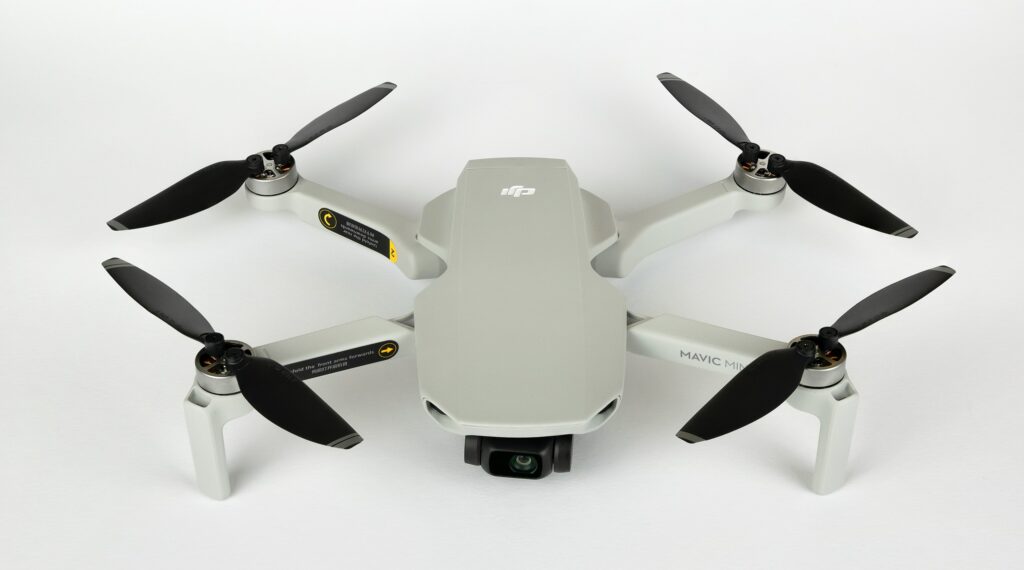
Our drone of choice is the DJI Mavic Mini 2. First and foremost, this is one of the smallest drones on the market that is also equipped with a high-quality camera capable of capturing 4K video and photos. Secondly, this drone is only 249 grams, which classifies it as a microdrone.
In Canada, microdrones are the least regulated class of drones, which allows pilots greater flexibility over where they can legally fly.
.jpg)
Additionally, the small size of this drone translates into less noise from the motors and propellers, allowing it to be flown covertly. And lastly, the capability of this drone to transmit footage directly to our mobile device allows us to retain footage captured, in the event that it is literally shot out of the air.
It’s worth noting that as each drone battery only permits 28 minutes of continuous flight time, we carry two drones and a multitude of batteries for each investigation. If drone number one is running low on battery power, we hover it in place until drone number two takes over with a fresh battery. We continue swapping drones until surveillance has ended for the day or the subject has left the area.
Final Report:
Although rural surveillance has its challenges, extra advance planning, creative thinking on your feet, and good surveillance gear can boost your chances of a great result for your client. And besides: it’s an excellent chance to get some fresh air!
About the author:
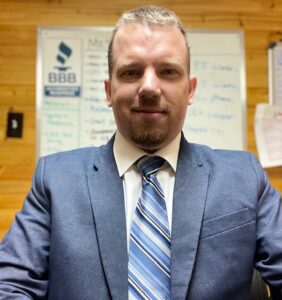
Rod Thompson is president of Metro Surveillance and Investigations, based in St. John’s, Newfoundland, Canada. Rod is a licensed private investigator and holds a Bachelor’s Degree in Police Studies and a Certificate of Criminology from Memorial University of Newfoundland. You can learn more about Rod and his company by visiting www.metroinvestigations.ca