

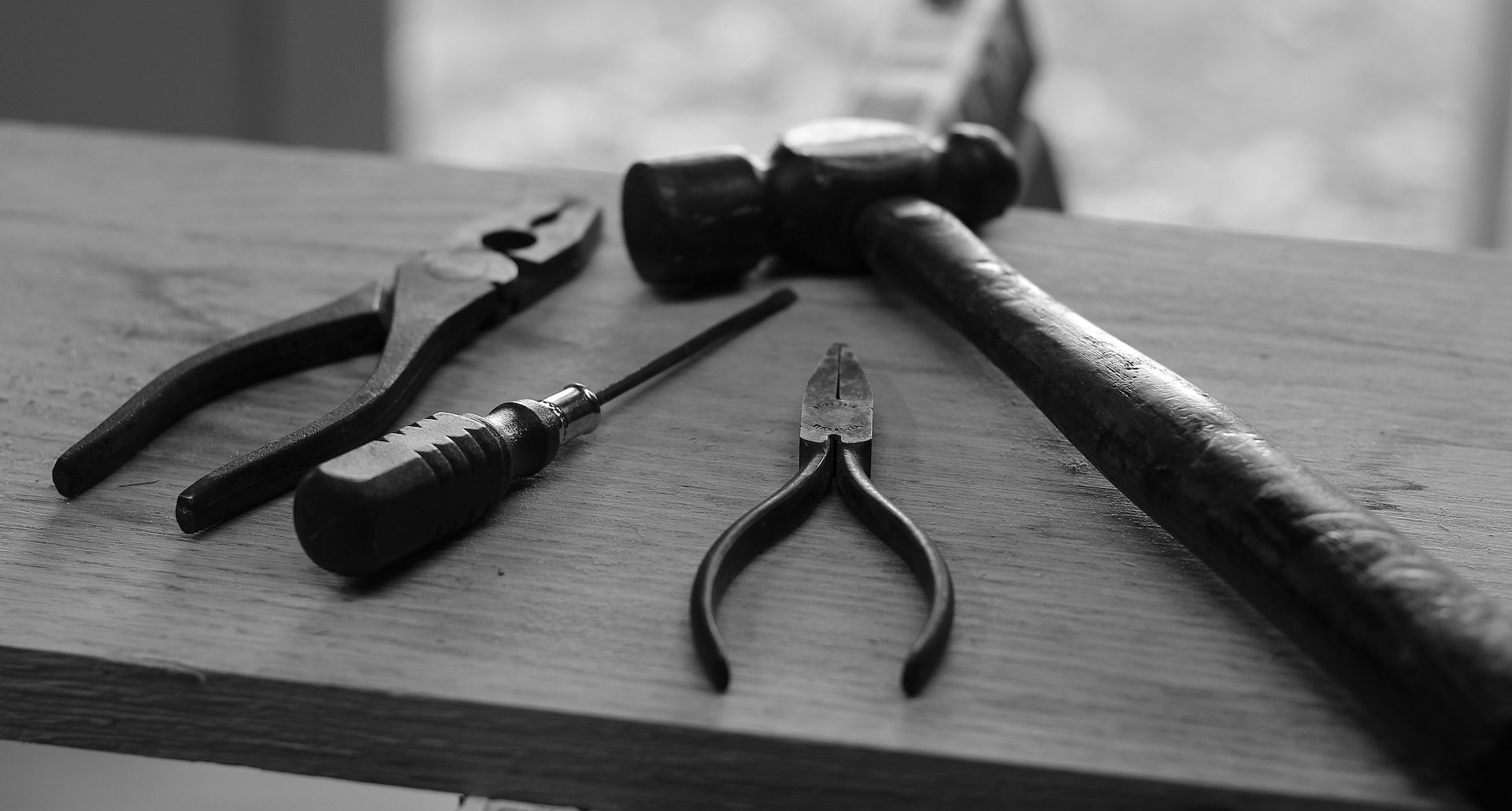

A Nebraska PI outlines seven key skills and techniques in a private investigator’s toolbox.
Baseball coaches and pundits talk about five-tool baseball players. A baseball player’s five tools are the ability to run, catch, throw, hit, and hit for power.
To my mind, private investigators have seven key tools in their toolbox.
Case Analysis
At the start of an investigation, you’ll need to get your head around the scope of work your client is requesting. Before you dive in, take a breath and make sure you know what you are being hired to do. I often send my attorney-client a general case plan for approval before I start the case. This heads off mission creep, manages expectations, and ensures I’m not expected to compromise my ethics or perform tasks I’m not willing or able to do.
Conducting a professional and ethically responsible investigation should always be your goal. It never hurts to do a self-check of your ethical compass. A good start is reading this excellent Pursuit Magazine article by Philip Segal, “Ethics and the Law for Private Investigators: An Overview.”
To review the fundamentals, check out Dean Beers’s book, Practical Methods for Legal Investigations – Concepts and Protocols in Civil and Criminal Cases. Dean and Karen Beers are great at covering the basics, and they also have other good books on Amazon and several good articles in the Pursuit Magazine archive.
People Finding (SKIPINT)
I have no idea how many people I’ve had to track down during my career. Many were not that hard to locate. Some subjects you never find.
I remember a case I did for the television show Good Morning America. I’d done prior work for this network TV producer — I’ll call her Suzy Lightning. She had someone she needed me to locate. Suzy said all the media outlets were trying to find this person. “No one can find her,” she told me.
As an old-school investigator, I went to the courthouse. I pulled a court file and found the subject’s phone number – handwritten on a document. I gave the number to Suzy. The subject was flown to New York and gave a powerful interview on GMA the next day.
Skip tracing — whether the person is easy to find or off the radar — is a fundamental skill for all PIs. The Pursuit archive has good articles on this subject, including “Skip Tracing and Location Investigations: What’s the Difference?” by Mark Murnan and “Chasing Ghosts: Skip Tracing the Toughest to Find People” by Philip Becnel.
Background Checks (OSINT)
Open-source intelligence (or OSINT) is collecting information from published or otherwise publicly available sources. Remember, it is open-source, NOT online-source. Old court case files, newspaper archives, and city directories may require investigators to leave the desk and deploy some shoe leather.
That being said, online sources and proprietary databases are essential tools for the investigator to learn to use correctly and legally. I worked a case for an attorney concerned about the man her sister was dating. I learned that the guy had moved a few times to different states. I punched a few more computer keys and discovered that the boyfriend was a sex offender who had absconded. His criminal history hadn’t caught up with him. I relayed the information, and the U.S. Marshals brought him into custody.
A Pursuit article by Jed Mahoney on asbestos defense investigations talks about how to gather decades-old background information. Brian Willingham also has some great information on the topic of OSINT via a PI Education webinar with Hal Humphreys.
Locating Assets & Financial Information (FININT)
Many private investigators specialize in complex financial cases. This is NOT my forte. But I still have been required to do basic asset searches in order to “follow the money.” I have had to verify banking, business, and employment relationships, and locate real property, vehicles, and cattle. I even located and repossessed an expensive electric breast pump.
For a good briefing on the subject, I’ll refer you to John Powers, who wrote an interesting article in the October 2017 issue of Pursuit Magazine: “Searching for Assets? Start Digging for Debts.“
Interviewing People (HUMINT)
Gathering human intelligence is what many of us get paid to do. A private investigator is required to have strong communication skills. A cross-section of society will cross your path in this profession. I have done interviews in homeless shelters, low, middle, and high-dollar homes, courthouses, farms, factories, banks, bars, universities, high-rise business offices, state capitols, police stations, prisons, and churches. A good interviewer can find a way to connect with anyone.
The basics of conducting interviews will carry you a long way, no matter who your interviewee is. Talk slowly and clearly. Maintain eye contact. Repeat questions throughout the interview to clarify key points. Summarize the interviewee’s statement in the end – to be sure everyone is clear on what was said.
Recording your interviews is an excellent way to critique yourself. I still catch myself interrupting an interviewee or talking a little too fast. Hal Humphreys’s PI Education webinar with Oliver Mackson offers good insight into conducting interviews on criminal defense cases. Pursuit Magazine has various articles on conducting interviews which can be found by typing “interview” on the search button.
Surveillance (SURVINT)
”I haven’t been deer hunting in years, Red. It’s too much like my work week.” —Loren Estleman, Retro: An Amos Walker Mystery.
Surveilling people is an art. And the best covert surveillance artists specialize in this work. Good surveillance operatives have that EDGE. You ride that edge as you balance a wide variety of risks that mobile surveillance and gathering video evidence presents.
I have written some useful (I hope) articles on surveillance, including my 2016 article for Pursuit: – “SPAM IN A VAN: 39 Things a Good Surveillance Operative Knows.”
I’d also recommend Eddie Cruz’s book, Surveillance: A Concept of the Art, for anyone learning the craft of covert surveillance.
Case Presentation (Writing / Briefing / Testifying):
You can be a great investigator, but if you can’t articulate your findings in a professional report, you probably won’t be in business for a long time. I think of investigative reports as marketing brochures. A clean and concise report that is courtroom ready will stand the investigator well. I would recommend Pursuit’s article by Barry Maguire: “Five Fast Improvements To Your Investigative Reports.”
It’s also important to learn how to brief your clients. Of course, every client is different, so you may have to adapt your briefing style, given the client’s temperament. And every case should be worked with an eye toward having to testify.
In every course on testifying, you will learn it is important to:
- Be prepared.
- Speak clearly.
- Only answer the question you’re asked.
- Give short answers.
- Let your attorney steer the questioning.
Takeaways
Being a private investigator can be a challenging way to make a living. Whether you specialize in SKIPINT, FININT, OSINT, HUMINT, or SURVINT, you should continue educating yourself to provide the best work product.
For fun and education, I would recommend the books written by working private investigators John Nardizzi (The Burden of Innocence) and Tyler Maroney (The Modern Detective – How Corporate Intelligence is Reshaping the World).
The memoirs by Scott Fulmer (Confessions of a Private Eye) and Mike Spencer (Private Eye Confidential: Stories from a Real PI) will also be of interest to PI enthusiasts. Pursuit Magazine’s editor Kim Green has several op-ed articles and book reviews for PI professionals and fans of the genre. You will gain great insight into the PI craft and get those necessary continuing education hours via the training platform at PIeducation.com.
About the author:
Steve Koenig (Koenig Investigative Agency) is a private investigator in central Nebraska. He handles criminal defense and civil litigation casework for attorneys. Books written by Steve can be found at Stephen-Koenig.com.