



Tradecraft Tips: A Texas attorney describes the grueling fights and hard-won victories that make up a career righting wrongs in the legal system.

First, understand the scale of the problem. To illustrate, Texas attorney Allison Clayton draws an analogy between wrongful convictions and medical errors. “We know that doctors have a rate of error — meaning they mess up, and they mess up so badly, somebody dies,” says Clayton. (She cites a 2016 Johns Hopkins study finding that medical error was the third-leading cause of death in the U.S., accounting for nearly ten percent of all deaths.) “So my question is, what is our rate of error as attorneys, that we mess up so badly that somebody innocent is wrongly convicted?”
Let this sink in: No one knows exactly what that rate of error is. To put in perspective just how vast this semi-hidden problem may be, Clayton extrapolates: “Let’s say our rate of error [as attorneys] is one percent — which is entirely unrealistic,” she says, implying that one percent is a lowball guess. “There were 822,000 criminal convictions in the state of Texas last year. If we have a one percent rate of error just last year alone, that’s like 8,000 wrongful convictions.
“That’s in one year, in one state,” Clayton reiterates. “People have no idea — they have no idea — how bad the legal system is and how vulnerable each and every one of us are.” She does know. An appellate and post-conviction attorney based in Lubbock, Clayton is deputy director of the Innocence Project of Texas, a nonprofit organization working to exonerate the wrongly convicted. She says cases come to the Innocence Project of Texas from one of three broad categories: the defendants, their attorneys, or a prosecutor’s office.
When a trial attorney refers a case, pay attention. Clayton says most defense attorneys tend to take losses somewhat in stride when a guilty client is convicted. “Because … this is the system working,” she explains. “But whenever you have an innocent person that gets convicted … that is the most deeply unsettling thing that a lot of these criminal defense attorneys can ever go through.
“Even if you do your best, you can still get a wrongful conviction,” says Clayton, a defense attorney herself. “And that really messes with people. So a lot of times those attorneys will reach out to us and they will say, ‘My guy needs help.'”
Requests from defendants usually arrive as letters from prison. Exercise respectful skepticism. Although many defendants contact organizations like the Innocence Project in good faith, some defendants lie about their innocence. “So one of our important jobs is to ferret out the liars from the truth tellers,” says Clayton.
Don’t assume you can tell when a defendant is lying. “I’m not a human lie detector,” admits Clayton. Sometimes, a DNA test can quickly rule out a defendant’s assertion of innocence. “When we do DNA testing and our guy comes back as guilty as can be, we drop them just as fast as you could imagine.”
Ultimately, deciding what cases to accept comes down to evidence. “We have to be able to gather the facts to prove our person’s innocence,” she says, clarifying that “it is possible to be guilty and still be wrongly convicted, legally speaking.” For example, a guilty defendant’s conviction can still be illegitimate if the defendant’s rights were violated in some way, such as by not receiving the effective representation the Constitution guarantees. “But can we take a case like that? No. Because we’re the Innocence Project of Texas, not the Wrongful Conviction Project. So we have to be absolutely certain that the person is in fact innocent — not just wrongly convicted, but is innocent and that we can prove it.”
Learn how wrongful convictions happen. Eyewitness misidentification and flawed forensic science are common culprits. That’s why some cases come to the Innocence Project of Texas by way of prosecutors’ offices or law enforcement agencies doing internal reviews. For example, after the FBI formally acknowledged in 2015 that microscopic hair analysis was a flawed forensic technique, the Texas Forensic Science Commission began reviewing cases in which hair comparison evidence might have put the wrong person behind bars.
Once you take a case, begin by looking at the evidence that got your client convicted in the first place. Don’t assume this task will be straightforward. “It’s a fight just to get the state to share the evidence with labs to do DNA testing on it, and we can go into sometimes years-long litigation over that,” says Clayton. “Most times these counties in Texas will fight us tooth and nail over whether the evidence exists [and] whether we can have access,” she says, Get familiar with your state’s policies on evidence storage and destruction to know when you can and cannot push back.
Reviewing the original evidence allows you to run more sophisticated tests, seek expert opinions, and generally look for flaws in the original trial that led to the wrongful conviction. For example, modern DNA testing can often prove more definitive than older forensic techniques. But, it’s expensive to do DNA testing, and finding experts to help interpret the data can be even more costly. Plus, the right expert you need for a case might not be available. It’s not uncommon to spend months or even years searching for the right specialist to help your case.
“We’re the Innocence Project of Texas, not the Wrongful Conviction Project. So we have to be absolutely certain that the person is in fact innocent — not just wrongly convicted, but is innocent and that we can prove it.”
Allison Clayton
Nonexistent evidence can prove to be an even more frustrating obstacle. With cases that happened decades ago, sometimes all the original evidence has been destroyed, and there are no living witnesses left. “That’s one of the hardest things to tell people,” Clayton says. “We believe you, but we can’t help you because we cannot put together facts proving to a court that you’re innocent.”
Find that inner drive that keeps you fighting through the huge roadblocks and heartbreaking losses. “I run on caffeine and rage,” Clayton says, only half joking. She recalls one case she took to the prosecutor of a rural Texas county: “And he said, ‘Off the record, yeah, this guy’s Innocent,” she says. “But on the record, we’re going to stand behind every single conviction that comes out of this county.’ So they knew. They knew.”
Balance your outrage with hope and doggedness. Clayton focuses on the endgame: getting justice for her client — and potentially, for a victim, whose real assailant may be walking free. Don’t get discouraged. These cases are long and tough, and you’ll need plenty of stamina to see them through. “Every case is a Mount Everest,” says Clayton. “Every single one.”
Don’t expect a hefty paycheck. Clayton says this kind of work is “at the absolute bottom of the payment pile” in the legal profession, but that she and her colleagues do it because they love it. Do expect a roller-coaster ride of emotion. Clayton, who is director of the Innocence Clinic at the Texas Tech School of Law, tells her students: “You will experience the highest of highs and the lowest of lows.”
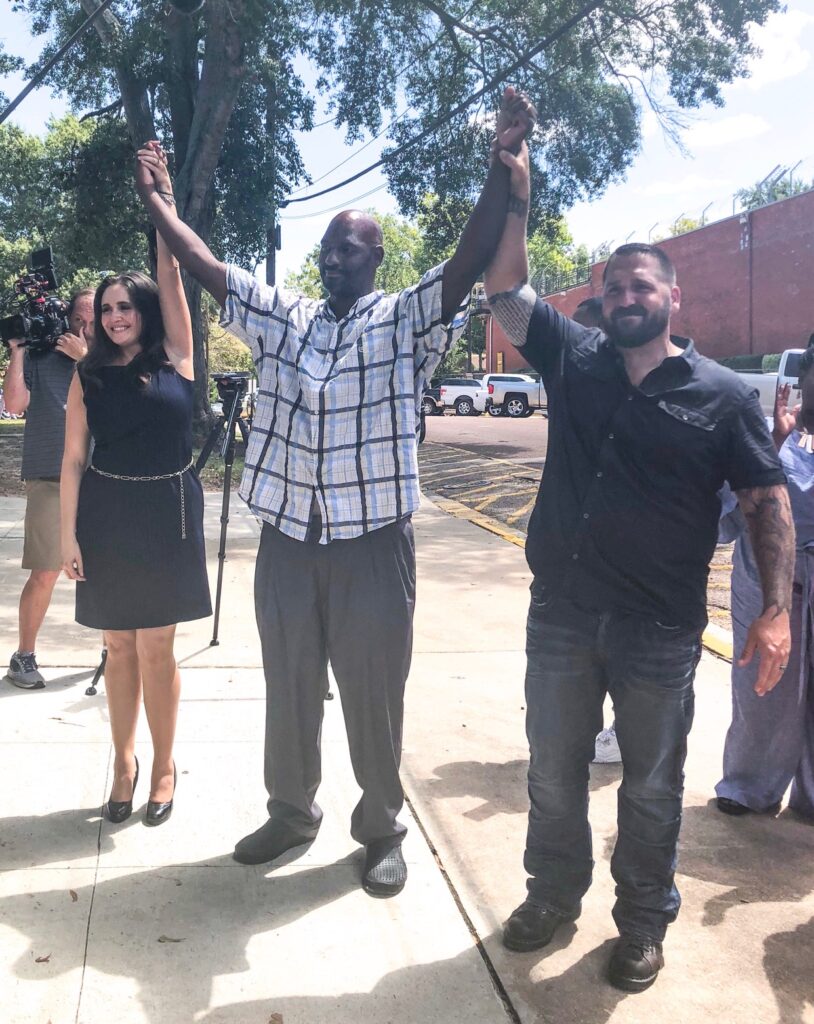
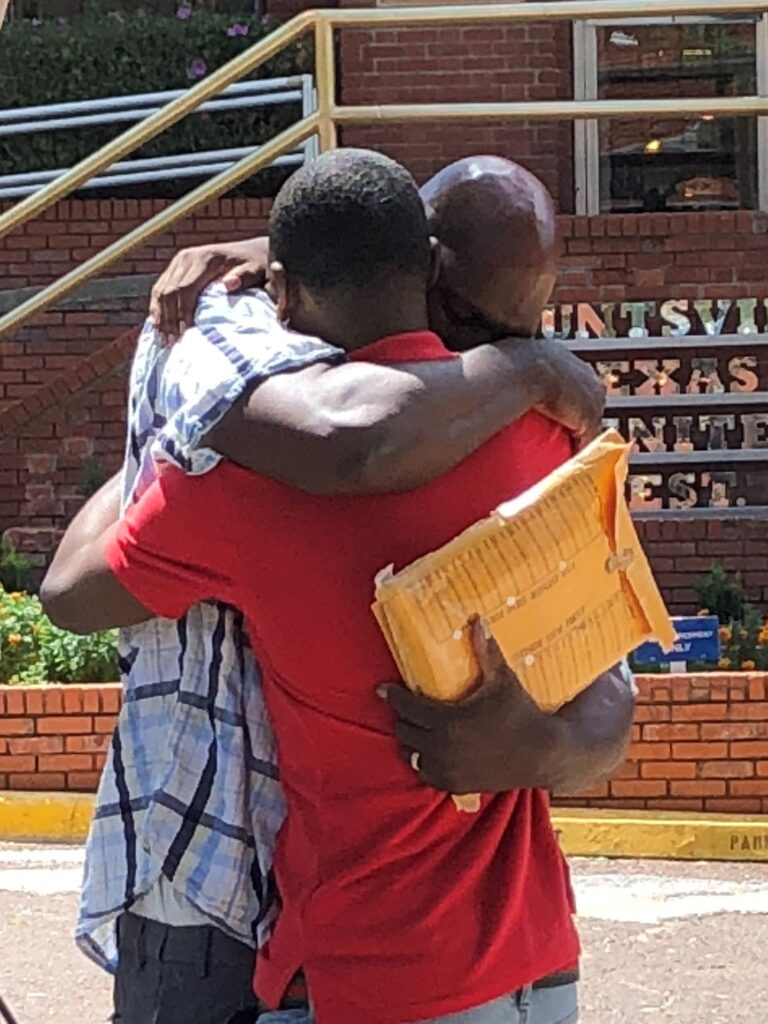
She lives for the wins. “There is no other high as a professional that you will ever have than sitting back and watching a family embrace after twenty years of wrongful imprisonment,” Clayton says. “It’s unreal.”
Click here to make a donation to the Innocence Project of Texas.
About the author:
Sarah Datta is a writer from San Diego, CA.